
Northern buckler fern
Dryopteris expansa
Description
Growing requirements
The northern buckler fern, known scientifically as Dryopteris expansa, is a perennial fern belonging to the Dryopteridaceae family. It is widely distributed across the northern hemisphere, typically inhabiting damp, cool woodland environments and shaded rocky slopes.
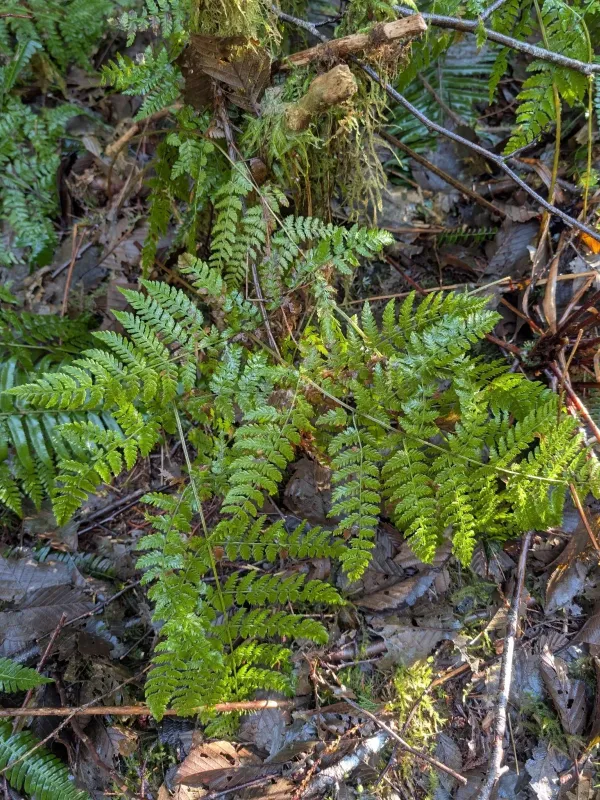
The plant features a stout, ascending rhizome covered in distinctive brownish scales. Its fronds are broadly triangular and tripinnate, characterized by a bright green color and an elegant, lacy appearance that makes it a prized ornamental species.
Cultivation of this fern requires a shaded or semi-shaded location protected from harsh, direct sunlight. The soil must be consistently moist, rich in organic matter, and acidic to neutral, closely mimicking the conditions of a forest floor.
Adequate drainage is essential to prevent the rhizomes from rotting, while high humidity levels ensure the fronds remain lush and vibrant. In landscape architecture, this species is frequently used for underplanting in deep shade where other plants struggle.
Its natural resilience allows it to adapt well to various forest-like settings, provided that the moisture levels remain stable throughout the growing season. Propagation is typically achieved through division of the rhizomes or by sowing spores in controlled environments.
Main diseases and pests
Slugs and snails are the most prominent pests for the northern buckler fern, particularly during the humid spring months. These mollusks can cause significant damage to emerging fronds, necessitating regular monitoring and physical barriers for protection.
Root rot caused by waterlogged soil is a major physiological threat. Without proper drainage, the rhizomes are prone to decay, which is often exacerbated by compacted soil conditions that restrict airflow to the root zone.
Spider mites may become an issue if the ambient humidity is too low for an extended period. Maintaining a humid microclimate around the fern is the most effective cultural method to prevent mite infestations and keep the fronds healthy.
Leaf spot diseases, which present as discolored patches on the fronds, can occur in poorly ventilated garden spaces. Improving air circulation by pruning surrounding dense foliage helps to reduce the incidence of fungal pathogens significantly.
While generally hardy, the northern buckler fern is susceptible to damage from herbicides used on adjacent grass or weeds. Careful weeding around the base of the fern is recommended to ensure its long-term vigor in ornamental beds.