
Champion's Wood Fern
Dryopteris championii
Description
Growing requirements
Champion's Wood Fern (Dryopteris championii) is a perennial ornamental fern belonging to the Dryopteridaceae family. Native to East Asia, including parts of China and Japan, this plant has gained popularity in professional landscaping due to its structural beauty.
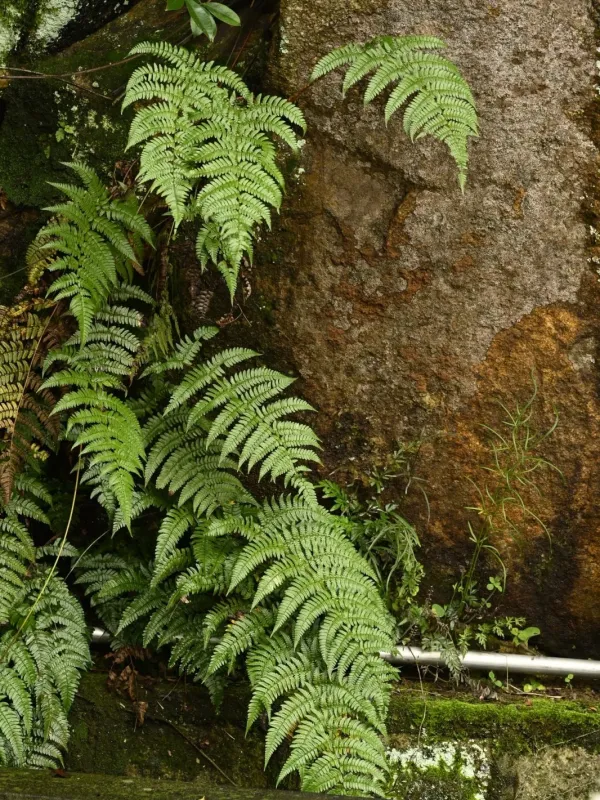
The plant features glossy, dark-green leathery fronds that form a distinctive, symmetrical rosette. It typically reaches a height of 50 to 60 centimeters, making it an excellent candidate for shaded border plantings or woodland garden designs.
Successful cultivation requires a location with partial to full shade, away from harsh midday sun. The soil must be rich in organic matter, moist, and well-drained to prevent root suffocation, which is a common issue for many fern species.
A consistent pH balance, preferably slightly acidic, promotes the best foliage color and health. Integrating compost or leaf mold into the planting hole ensures the plant has access to essential nutrients throughout the growing season.
Maintaining high humidity levels is crucial. In regions with dry summers, growers should incorporate mulch around the crown to retain soil moisture and stabilize the root temperature, which helps the fern withstand various weather fluctuations.
Main diseases and pests
The primary agricultural challenge with Dryopteris championii involves root rot caused by poor soil drainage. If the soil remains saturated for extended periods, the rhizomes become vulnerable to opportunistic fungi, leading to plant decline.
Slugs and snails are the most frequent pests, particularly in early spring when the young, tender fronds (crosiers) are unfolding. Protective measures, such as barrier applications or organic baits, are recommended to protect the ornamental value of the fern.
In hot and dry conditions, spider mites may become a problem, causing the fronds to lose their glossy appearance and eventually yellow. Increasing air humidity through misting or site selection can naturally discourage these infestations.
Leaf spots, often induced by water sitting on the foliage, can be minimized by watering the soil directly rather than overhead. This simple practice keeps the leaves dry and prevents the spread of spores between individual plants.
Regular monitoring for early signs of stress is essential. Providing adequate space between plants to ensure constant air circulation acts as the most effective preventative measure against the majority of potential fern diseases.