
Drynaria
Drynaria
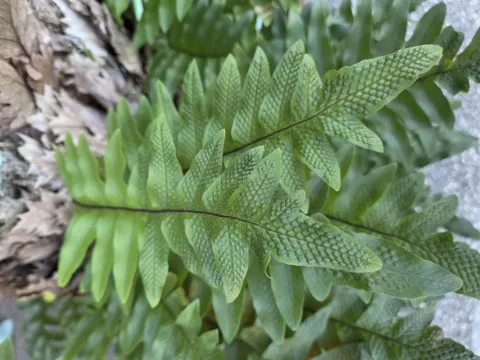
Drynaria is a genus of ferns belonging to the family Polypodiaceae. In their natural habitat, these plants are epiphytes or lithophytes, growing on tree trunks or rock surfaces within the tropical forests of Africa, Asia, and Australia.
What the section contains


Drynaria
A key botanical feature of this genus is leaf dimorphism. Drynaria develops two types of fronds: sterile (nest) fronds, which hug the support, collect organic debris, and retain moisture, and fertile (foliage) fronds, which have a classic dissected appearance.
For successful cultivation, it is necessary to provide high humidity (at least 60–70%) and stable warm temperatures in the range of 20–25°C. The plant is extremely sensitive to sudden temperature fluctuations and drafts, which can cause leaf yellowing and shedding.
Substrate requirements are specific: the plant does not tolerate dense garden soil. An optimal choice is a loose mixture based on pine bark, charcoal, sphagnum moss, and a small amount of coconut fiber, which ensures free airflow to the roots.
In terms of utility, Drynaria is valued as an ornamental foliage plant for vertical gardening and greenhouse cultivation. In some Southeast Asian countries, certain species are traditionally used in folk medicine, although the plant is not grown in industrial agriculture due to its slow growth rate.
The main pests for Drynaria are scale insects and mealybugs, which settle in the axils of the sterile fronds. Regular inspection of the underside of the foliage allows for the timely detection of parasite colonies and prevents their spread.
Overwatering and moisture stagnation in the substrate inevitably lead to root rot. To prevent fungal diseases, it is essential to follow a drying-out regime for the top layer of the substrate and ensure efficient drainage in the container.