
Drynaria meyeniana
Drynaria meyeniana
Description
Growing requirements
Drynaria meyeniana is a remarkable species belonging to the Polypodiaceae family, native to the tropical forests of Southeast Asia, including the Philippines and Taiwan. As a true epiphyte, it typically grows on tree trunks and rocky surfaces, demonstrating unique evolutionary adaptations for nutrient acquisition in high-canopy environments.
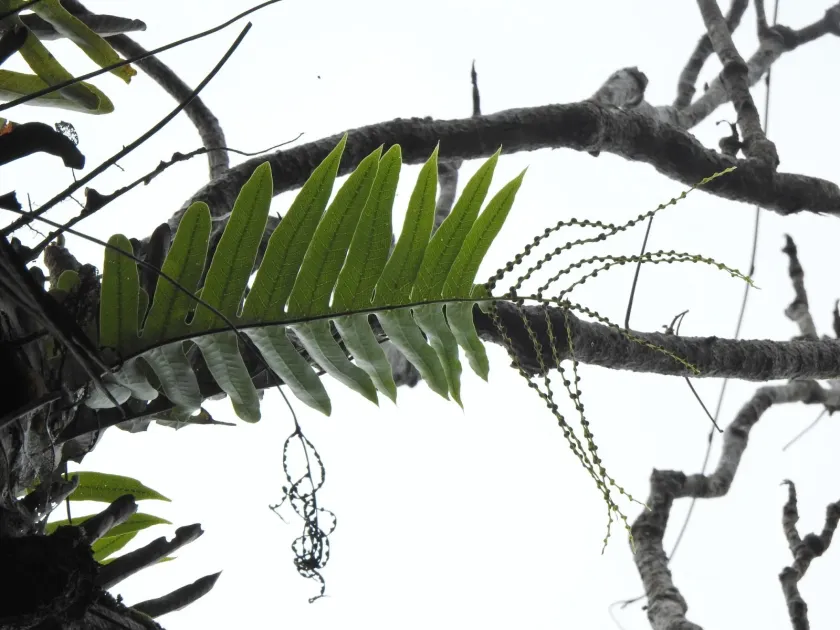
The plant is distinguished by its dimorphic fronds: specialized "nest" leaves that remain sterile and collect organic debris to form a self-sustaining compost mound, and long, pinnate fertile fronds that emerge from the thick, scaly rhizomes. These rhizomes store energy and moisture, allowing the plant to thrive in regions with periodic seasonal variations.
Cultivation requirements involve creating an environment that mimics its natural habitat: high ambient humidity, warm temperatures between 20–25 degrees Celsius, and excellent drainage. It should be grown in an epiphytic mounting medium, such as orchid bark, charcoal, and sphagnum moss, to prevent root asphyxiation and promote healthy rhizome spread.
Economically, Drynaria meyeniana is primarily utilized in the horticultural industry as a high-value ornamental plant for greenhouses and botanical conservatories. Its striking morphological features make it a popular subject for specialized fern collections and interior landscaping that focuses on exotic, tropical aesthetics.
Regarding plant health, the main threats are rhizome rot caused by overwatering or using an excessively heavy potting mix that retains too much moisture. Additionally, pests such as scale insects and spider mites can infest the fronds, particularly in environments with poor air circulation or low humidity, necessitating regular manual monitoring and organic pest control measures.