
Drynaria rigidula
Drynaria rigidula
Description
Growing requirements
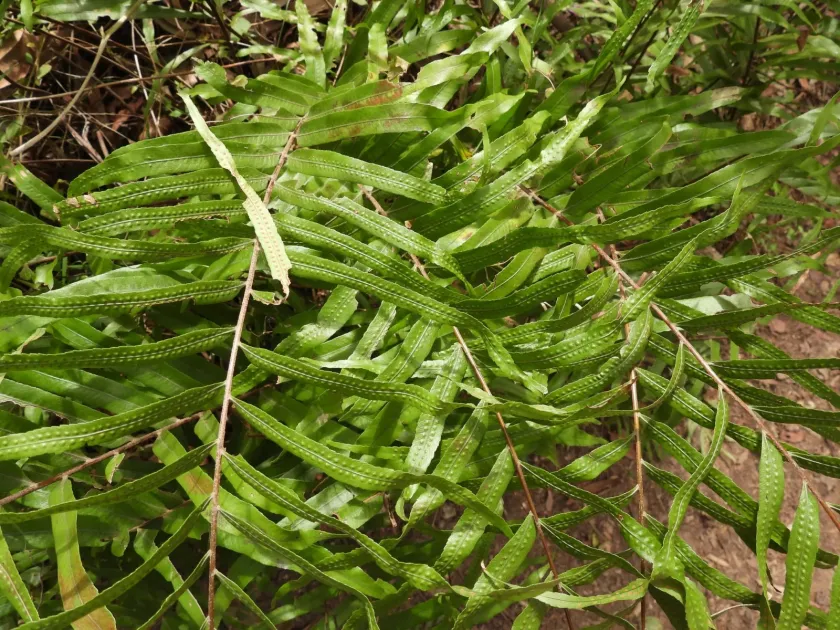
Drynaria rigidula is a distinctive epiphytic fern species belonging to the family Polypodiaceae. It is characterized by its dimorphic fronds, including specialized "nest" or shield leaves that collect organic debris and long, graceful, pinnate fertile fronds that emerge from thick, creeping rhizomes.
The native distribution of this fern spans across tropical Southeast Asia, Australia, and the Pacific Islands. In its natural habitat, it thrives as an epiphyte on tree trunks or lithophyte on rocky surfaces, which necessitates an airy, well-draining growth medium in cultivation.
For horticultural purposes, it is best grown in specialized potting mixes rich in organic matter, such as bark chips, perlite, and sphagnum moss. This composition ensures adequate aeration and mimics the natural epiphytic niche where the plant obtains nutrients and moisture.
The plant requires bright, filtered light to maintain its robust growth and structural integrity. Direct sunlight can scorch the delicate fertile fronds, while extremely low light levels can cause the plant to become spindly and lose its characteristic vigor.
Temperature management is crucial, with optimal ranges typically between 18°C and 26°C. Dринария жесткая is primarily utilized in the nursery trade as an exotic ornamental plant for hanging baskets, conservatories, and vertical wall displays in interior design.
Main diseases and pests
Spider mites are the most prevalent pests, particularly in indoor environments with low relative humidity. Preventive care includes maintaining high ambient humidity and ensuring proper air circulation to deter mite colonization on the undersides of the fronds.
Root and rhizome rot is the most serious threat, usually caused by overwatering or poor drainage. Since the rhizomes are the energy storage organs of the fern, any signs of decay require immediate action, including repotting into fresh, dry substrate and pruning infected areas.
Scale insects can occasionally infest the stems and the base of the fronds. Mechanical removal with a soft brush dipped in mild soap solution is often sufficient for minor infestations; however, systemic insecticides may be necessary for severe cases.
Nutrient deficiency, evidenced by chlorosis or stunted growth of fertile fronds, can be mitigated through the occasional use of liquid fertilizers formulated for ferns. High salt concentration should be avoided, as it can be detrimental to the plant's delicate root system.
Maintaining a consistent environment is the best defense against pathogens. Sudden shifts in moisture levels or temperatures weaken the plant's resistance, making it more susceptible to opportunistic fungal infections that can damage the leaf tissues.