
Drynaria coronans
Drynaria coronans
Description
Growing requirements
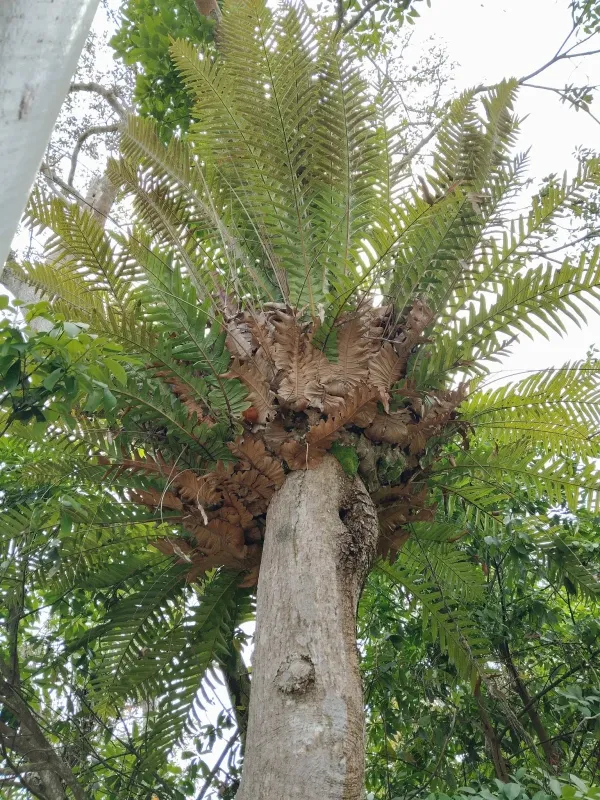
Drynaria coronans is a remarkable epiphytic fern belonging to the Polypodiaceae family. Native to the tropical regions of Southeast Asia, specifically India, China, and Indonesia, this species naturally colonizes tree trunks and rocky outcrops in humid forests.
The plant is defined by its dimorphic fronds: distinct nest-like fronds that collect leaf litter to obtain nutrients, and fertile pinnate fronds that extend outward to capture light and carry spores. This biological adaptation allows the plant to thrive as an epiphyte.
In cultivation, this fern requires a high-humidity environment, ideally maintaining levels between 65% and 80%. Temperatures should remain stable throughout the year, ideally ranging from 20°C to 26°C, as the plant does not tolerate frost or cold drafts.
The growing medium must be highly porous to mimic natural epiphytic conditions. A mixture of pine bark, charcoal, perlite, and a small amount of sphagnum moss is recommended to ensure excellent drainage and root aeration, which are critical for health.
Drynaria coronans prefers bright, filtered light. Direct sunlight is harmful and causes tissue scorching, whereas insufficient light leads to weakened fronds and stunted growth. Providing 40-50% shade is recommended in greenhouse settings.
Main diseases and pests
Mealybugs are the most common pests that infest this fern, often hiding deep within the nest fronds. Frequent inspection of the rhizomes and the underside of the fronds is necessary to prevent severe infestations that can kill the plant.
Scale insects can also present a significant problem, colonizing the stems and leaves. If infestation occurs, systemic insecticides or targeted mechanical removal should be employed immediately to save the structural integrity of the plant.
Root rot caused by stagnant moisture is the primary physiological threat. Overwatering, especially during cooler periods, leads to the decay of the rhizome system. Ensure that the substrate is well-drained and allowed to dry slightly between waterings.
Fungal leaf spot can develop in environments with poor air circulation and high humidity. Improving ventilation and maintaining a clean growing area are the best preventive measures to reduce the impact of these diseases.
Chlorosis, or yellowing of the foliage, is often a result of using mineral-heavy water or a lack of appropriate nutrients. Using distilled or rainwater and applying a diluted balanced fertilizer during the growing season helps maintain plant vigor.