
Drimia uniflora
Drimia uniflora
Description
Growing requirements
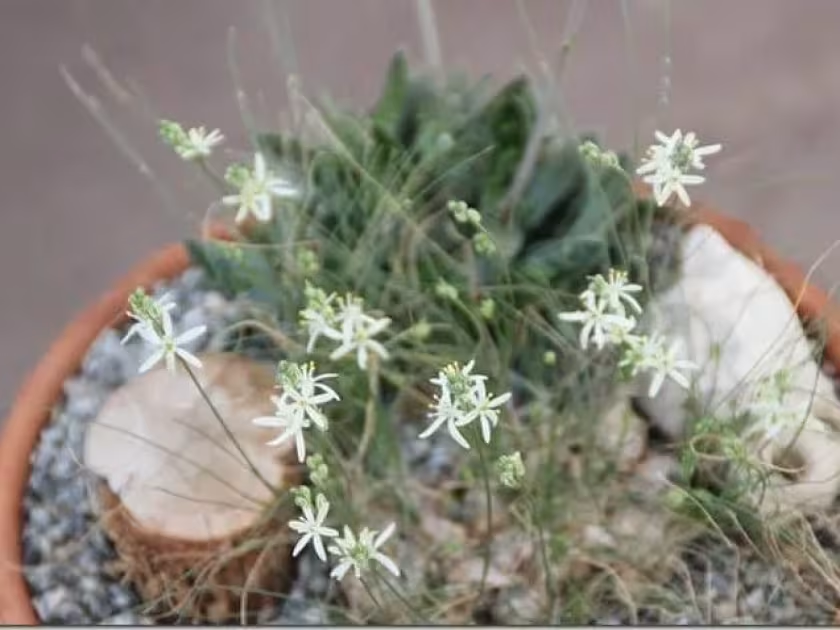
Drimia uniflora is a perennial bulbous plant belonging to the Asparagaceae family. Native to South Africa, it has evolved to thrive in arid and semi-arid climates, where rainfall is sporadic and soil conditions are often gravelly or sandy.
The plant features a prominent bulb that functions as a critical storage organ for nutrients and moisture. This biological adaptation allows the plant to enter a state of dormancy during hot, dry seasons, protecting it from environmental stress.
Cultivation of this species requires a substrate with excellent drainage properties to prevent bulb rot. A mixture of horticultural sand, grit, and loam is typically recommended to simulate the natural habitat and ensure the roots receive adequate aeration.
Drimia uniflora thrives in bright, direct to filtered light conditions. Sufficient solar exposure is essential for the plant to complete its flowering cycle and build up the energy reserves necessary for the following growing season.
Agricultural management revolves around mimicking the natural dry and wet cycles of its origin. Irrigation should be generous during the growing period but withheld completely during the dormant phase to maintain the health of the bulb.
Main diseases and pests
Root and bulb rot are the primary threats to Drimia uniflora, usually triggered by poor drainage or overwatering. These fungal pathogens can destroy the internal structure of the bulb in a short period, leading to the rapid decline of the plant.
Mealybugs are a common pest problem, particularly when plants are grown in confined or poorly ventilated conditions. These insects tend to hide in the tight spaces between the leaf bases, making them difficult to detect early.
Spider mites can also attack the foliage during hot, dry spells if the humidity levels are too low. Their feeding activity results in chlorotic spots and premature senescence of the leaves, weakening the overall plant.
Preventative measures include maintaining proper airflow and avoiding overhead watering, which can trap moisture near the neck of the bulb. Using clean, pathogen-free soil is essential to prevent soil-borne diseases such as nematodes.
If an infestation occurs, it is recommended to apply targeted horticultural oils or systemic insecticides. Regular monitoring and removing heavily infested plant parts help control the spread of pests and maintain the vigor of the plant collection.