
Drimia fugax
Drimia fugax
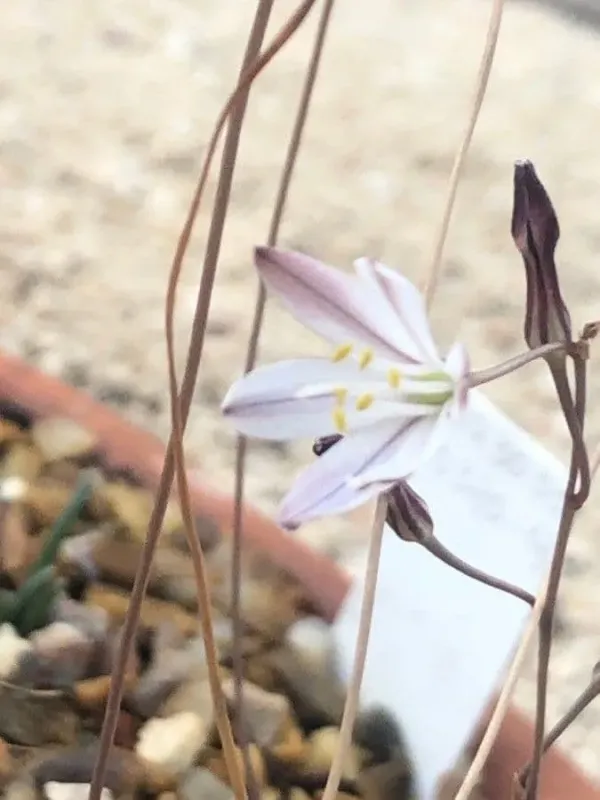
Description
Growing requirements
Drimia fugax is a small bulbous plant belonging to the Asparagaceae family, subfamily Scilloideae. Native to the arid landscapes of Southern Africa, this species has evolved a specialized life cycle that allows it to thrive in environments with unpredictable rainfall patterns, making it a true ephemeral geophyte.
The botanical structure of Drimia fugax includes a small, globose bulb from which narrow, often mottled leaves emerge during the wet season. These leaves are relatively short-lived; once the dry season approaches, the plant undergoes dormancy, shedding its foliage to minimize water loss and protect its internal resources.
Successful cultivation of this species requires a highly porous, gritty substrate that mimics its natural rocky habitat. Standard potting soil is typically unsuitable unless heavily amended with coarse sand or pumice to ensure rapid drainage, as any water stagnation can quickly lead to the death of the root system.
This plant thrives under bright, direct sunlight, which is essential for maintaining compact growth and promoting flowering. During the growing season, regular but infrequent watering is required, but it is strictly vital to withhold water entirely during the dormant period to prevent fungal complications and rot.
In terms of хозяйственное (horticultural) use, Drimia fugax is primarily utilized in specialized botanical collections and for succulent enthusiasts. Its unique appearance, combined with the intriguing seasonal rhythm of growth and dormancy, makes it a prized specimen for indoor greenhouse cultivation in climate-controlled environments.
Main diseases and pests
The most significant threat to Drimia fugax is bulb rot caused by pathogenic fungi such as Fusarium and Penicillium species. These pathogens proliferate in moist conditions or in substrates with poor aeration, often leading to the sudden collapse of the bulb, which is irreversible once the rot sets in.
Common indoor pests include spider mites and mealybugs, which are particularly troublesome during the vegetative phase. Spider mites thrive in the dry air often found in indoor settings, while mealybugs can nestle into the crevices of the bulb scales, necessitating careful monitoring and targeted use of systemic pesticides.