
Drimia altissima
Drimia altissima
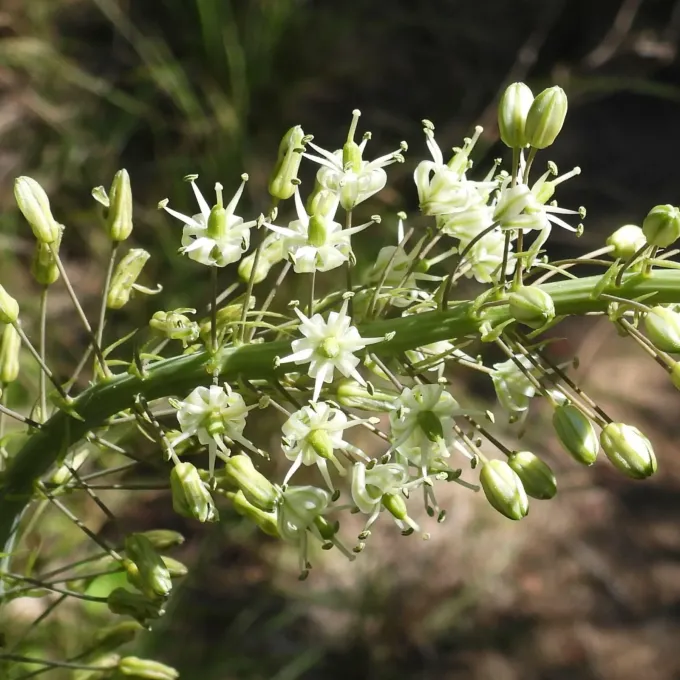
Description
Sowing dates
Propagation of Drimia altissima is primarily achieved vegetatively through the division of daughter bulbs, which form naturally at the base of the mother plant. Planting is best performed during the dormant phase, typically timed with the onset of the wet season when the foliage dies back.
For seed propagation, a well-draining, sand-based substrate is essential to prevent moisture accumulation. Seeds should be sown immediately after harvesting due to their rapid loss of viability, maintaining a temperature range of 20–22 degrees Celsius to ensure uniform germination.
The sowing depth must be shallow, barely covering the seeds to ensure they receive sufficient light. Once seedlings emerge, provide strong, indirect light to prevent etiolation and promote the development of a healthy, robust root system before the first dormant period.
Pre-treatment of bulbs with fungicides is a standard procedure in commercial settings to protect against soil-borne pathogens. Bulbs are planted at a depth equivalent to two or three times their diameter, ensuring sufficient spacing to facilitate adequate air circulation between individual plants.
Nutrient management involves applying low-nitrogen, high-phosphorus fertilizers at the start of the growth cycle. High nitrogen levels should be avoided, as they promote excessive succulent growth and significantly increase the risk of bulb rot during the subsequent vegetative stages.
Growing requirements
Drimia altissima is a perennial bulbous plant belonging to the Asparagaceae family, naturally adapted to arid and semi-arid environments. It thrives in well-draining, sandy or rocky soils, as the plant is highly susceptible to root damage in waterlogged conditions.
As a sun-loving species, the crop requires intense natural light to maintain its metabolic functions and promote the synthesis of active chemical compounds. Cultivation areas must provide optimal solar exposure throughout the active growing season to ensure vigorous development.
The temperature requirements are strictly tropical or subtropical, as the plant cannot tolerate freezing temperatures. In temperate agricultural regions, successful production is only possible within controlled greenhouse environments where both temperature and humidity can be strictly regulated.
The soil should be neutral or slightly alkaline in pH. Heavy clay soils are unsuitable and must be amended with grit or perlite to improve porosity, as adequate aeration of the root zone is the most critical factor for the long-term survival of the crop.
Watering regimes should be carefully managed, providing moderate moisture during the growing season while strictly withholding water during dormancy. Professional monitoring of substrate moisture is vital to prevent the physiological collapse of the bulbs during the rest phase.
Yield
The yield of Drimia altissima is calculated based on the production of mature, high-quality bulbs used in the pharmaceutical industry. Commercial bulb maturity typically requires three to four years of consistent growth under managed conditions.
Productivity is greatly enhanced by frequent separation of offsets, which allows the mother plant to dedicate its energy toward increasing its own biomass. A well-maintained plantation with proper bulb spacing will yield significantly more standardized medicinal raw material.
Balanced fertilization, focusing on potassium for bulb health and phosphorus for root development, is essential for optimizing yield. Some research suggests that controlled stress, such as slight water deficits, may trigger higher concentrations of specific bioactive secondary metabolites.
Long-term yield stability requires crop rotation or periodic soil replenishment to prevent nutrient depletion and the build-up of specific pathogens in the growing medium. Sustainable harvesting practices are necessary to maintain the integrity of the mother stock.
Light intensity is the primary driver of photosynthesis and biomass accumulation. Maximizing light exposure, combined with temperature control, results in denser, healthier bulbs with superior pharmacological properties suitable for industrial processing.
Main diseases and pests
The most significant threats to Drimia altissima are fungal diseases such as Fusarium rot, which are triggered by excess moisture in the root zone. Prevention relies entirely on strict adherence to watering protocols and the use of high-porosity substrates.
Pests such as spider mites and mealybugs can infest the foliage, particularly in poorly ventilated greenhouse environments. Proactive monitoring and the application of systemic insecticides or acaricides are required to control populations before they reach economic damage thresholds.
Root-knot nematodes are a critical concern, as they damage the basal plate of the bulb, creating entry points for secondary bacterial infections. Soil sterilization prior to planting and the use of clean, disease-free stock are the best defenses against these pests.
Slugs and snails may damage leaves during wet seasons or in high-humidity cultivation cycles. Barrier methods or targeted molluscicides are effective in reducing foliar damage that could otherwise limit the plant’s photosynthetic capacity.
Powdery mildew may develop if humidity levels are high and airflow is insufficient. Maintaining a consistent airflow using mechanical ventilation and applying broad-spectrum fungicides can prevent the spread of foliar pathogens across the plantation.
Harvesting
Harvesting occurs exclusively during the plant's dormant phase, identified by the complete yellowing and drying of the foliage. This timing ensures that the bulb is at its peak physiological maturity and ready for pharmaceutical extraction.
Careful extraction from the soil is required to minimize mechanical damage to the bulb's outer scales. Any cuts or bruises on the bulb surface act as primary sites for post-harvest infections, which can lead to significant losses in storage.
Post-harvest handling involves cleaning and shade-drying the bulbs in a well-ventilated area to allow the skin to harden. This curing process is essential to create a protective barrier against moisture loss and opportunistic decay organisms.
Storage facilities must provide a dry, cool environment with consistent ventilation to prevent self-heating within the bulb bulk. Stacking bulbs in deep piles should be avoided, as it restricts airflow and encourages the growth of spoilage microorganisms.
Transportation of the harvest requires protected containers to prevent pressure-related damage or vibration-induced bruising. Adhering to these strict post-harvest protocols ensures that the raw material remains high-quality until it reaches the processing facility.