
Drimia
Drimia hybrids
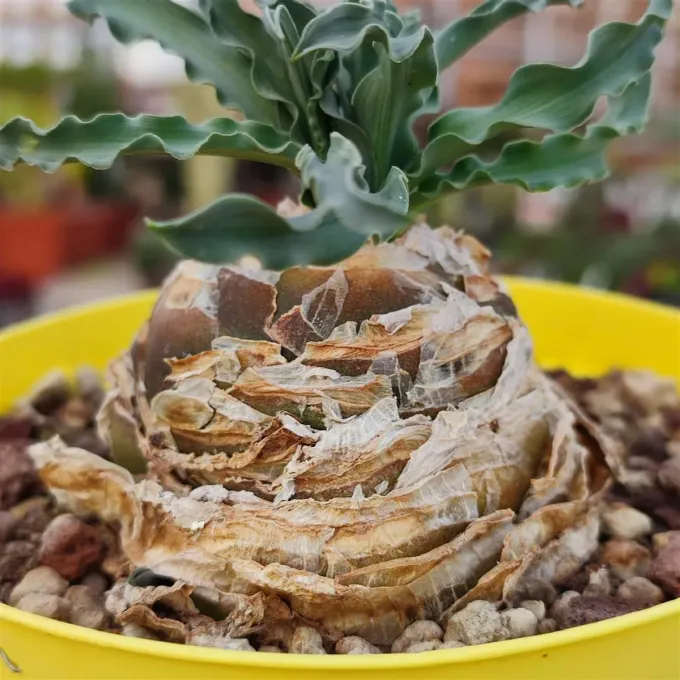
Description
Growing requirements
Drimia is a genus of bulbous perennial plants belonging to the family Asparagaceae. These plants are well-adapted to arid environments, utilizing their large, succulent bulbs as storage organs to survive extended drought periods typical of their native African and Mediterranean habitats.
For successful cultivation, Drimia requires a gritty, free-draining substrate that mimics its natural rocky or sandy terrain. Proper aeration is critical, as the roots are highly susceptible to rot if subjected to waterlogged soil conditions for even short intervals.
The plant thrives in full sun, which is essential for triggering the development of its characteristic raceme inflorescences. Light levels directly correlate with the vigor of the plant, though it must be gradually acclimated to high-intensity light after the dormancy period.
Watering management is the most important aspect of Drimia agronomy. During the active growth phase, water should be applied moderately, allowing the soil to dry out between waterings. During dormancy, water must be withheld entirely to mirror the natural dry season.
Botanically, the genus is characterized by high variability in foliage morphology. Depending on the species, leaves may emerge either before, during, or after the flowering period, a trait that growers must consider when planning the aesthetic or physiological maintenance of the crop.
Main diseases and pests
The primary threats to Drimia crops are soil-borne fungal pathogens, particularly those responsible for basal rot. These occur predominantly when the plant is kept in containers with inadequate drainage or overwatered during the dormant stage.
Common agricultural pests include spider mites and mealybugs. These sap-sucking insects thrive in the low-humidity environments often found in greenhouses where Drimia is typically cultivated.
Integrated pest management protocols, including early detection and the use of targeted systemic insecticides, are necessary to prevent the rapid spread of infestations in high-density planting conditions.
Good hygiene practices, such as sanitizing potting benches and using sterile substrates, are essential to minimize the risk of spreading soil pathogens between batches of bulbous crops.
Climate control, specifically maintaining lower temperatures during the dormant cycle, significantly improves plant resistance to secondary infections and physiological stress.