
Nocturnal Drimia
Drimia noctiflora
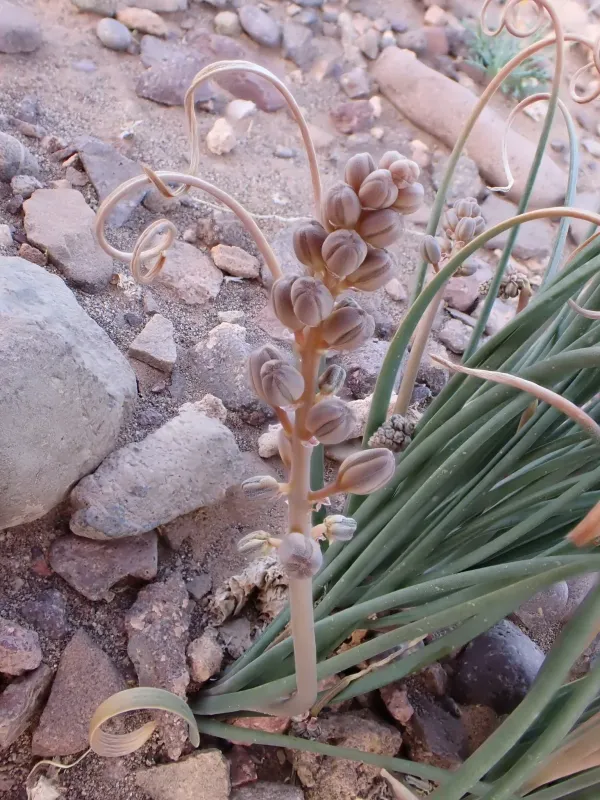
Description
Sowing dates
Nocturnal Drimia is typically propagated by separating offsets or daughter bulbs from the parent plant during its dormant phase.
Seed propagation is also possible, though it requires fresh seeds sown in a sandy, well-draining medium while maintaining consistent humidity for germination.
The optimal time for planting is at the beginning of the growth season, immediately after the plant emerges from its dormant state.
Planting depth should be shallow, keeping the neck of the bulb at or just above the soil level to prevent moisture-related rot.
Proper spacing between bulbs is essential to allow for airflow, which significantly reduces the risk of fungal infections in the root zone.
Growing requirements
Drimia noctiflora, a member of the Asparagaceae family, is native to the arid environments of Southern Africa and is well-adapted to rocky soils.
The plant requires a high-drainage growing medium consisting of a mix of sand, pumice, and loam to mimic its natural arid habitat.
Full sun exposure is necessary for the plant to thrive, as it supports both the vegetative growth cycle and the unique blooming process.
Climatic requirements dictate a distinct cycle: warmth during the growing season and a cool, completely dry rest period during dormancy.
Watering should be withheld entirely during dormancy, as any residual moisture can lead to rapid bulb decay in this drought-adapted species.
Main diseases and pests
The primary threat to Drimia noctiflora is excessive soil moisture, which inevitably triggers rot in the bulb and root system.
Fungal pathogens such as Fusarium species can become highly destructive if the plant is maintained in stagnant, poorly ventilated conditions.
Pests like mealybugs and spider mites may occasionally infest the foliage, particularly when the plants are grown in sheltered greenhouse environments.
Preventive care involves strict adherence to a dry dormancy period and ensuring that the growing medium is completely aerated before watering.
Regular monitoring of bulb health is recommended, with immediate isolation and treatment required at the first sign of soft rot or pest infestation.
Harvesting
Harvesting or transplanting should occur during the plant's dormant cycle, once the leaves have naturally withered and dried back completely.
When lifting bulbs, extreme care must be taken to preserve the tunic (outer layer), which acts as a critical protective barrier against dehydration.
After removal from the soil, the bulbs should be cleaned of old roots and debris, then cured in a cool, shaded area for several days.
Storage requires a dry, well-ventilated environment where temperatures remain stable, preventing premature sprouting or fungal outbreaks.
Sorting the stored bulbs allows for the removal of damaged individuals, ensuring that the health of the remaining stock is preserved until the next season.