
Dracula verticulosa
Dracula verticulosa
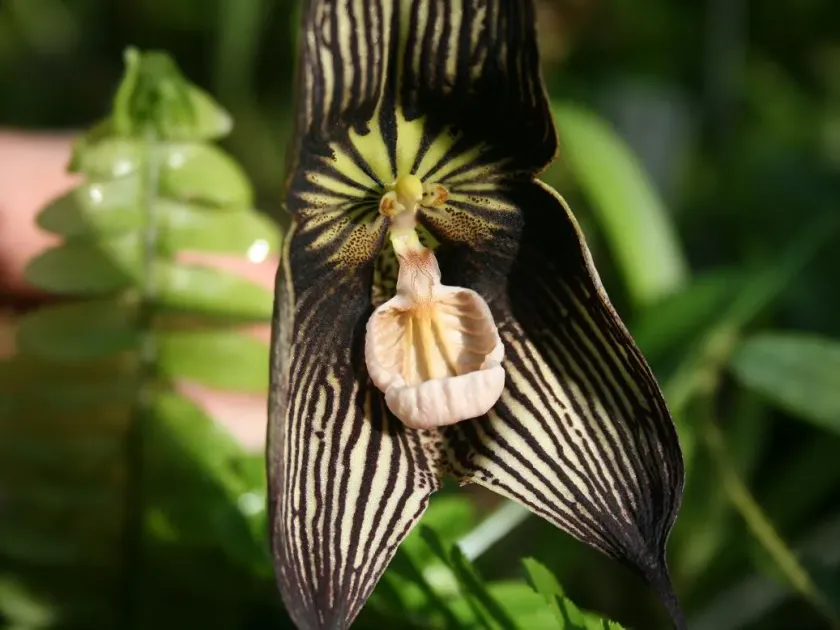
Description
Growing requirements
Dracula verticulosa is a rare species of epiphytic orchid belonging to the Orchidaceae family. It is native to the cloud forests of Colombia, where it thrives in cool, moist, and high-altitude environments, usually found at elevations between 1,800 and 2,200 meters.
Botanically, this species is distinguished by its lack of pseudobulbs. It develops tufts of thin, lanceolate leaves and produces characteristic pendant inflorescences. Due to these drooping flower spikes, the plant is best grown in hanging baskets or slatted wooden boxes.
The cultural requirements are strict, focusing on a cool temperature regime. Daytime temperatures should ideally remain between 18°C and 20°C, while night temperatures are essential to drop below 15°C to simulate its natural habitat and promote physiological health.
Humidity levels must be consistently high, ranging from 70% to 90%. Proper air movement is vital; without a constant flow of fresh air, the plant quickly becomes susceptible to fungal and bacterial infections within its dense foliage.
The potting medium must be exceptionally airy and moisture-retentive, with high-quality sphagnum moss being the industry standard. Fertilization should be applied sparingly, using highly diluted, urea-free fertilizers to prevent root burn.
Main diseases and pests
Fungal rots are the most significant threat to Dracula verticulosa, often triggered by excessive moisture coupled with poor ventilation. When the plant remains wet for too long without air circulation, tissues begin to decay rapidly.
Common pests include spider mites and scale insects. Spider mites thrive in conditions where humidity drops below recommended levels, damaging the tender foliage and leaving the plant vulnerable to secondary infections.
Scale insects often hide in the base of the leaf tufts. Regular inspection is necessary to detect these pests early, as they can weaken the plant by feeding on its sap, leading to reduced flowering and general decline.
Chemical control should be approached with caution. Many orchids, including this species, are sensitive to high concentrations of pesticides, which can damage the delicate root hairs and leaf cuticles.
Preventive maintenance involves strictly maintaining hygiene in the cultivation area. Removing dead leaves, ensuring high-quality water usage, and quarantine of new plants are the best defenses against both pests and chronic diseases.