
Dracula bella
Dracula bella
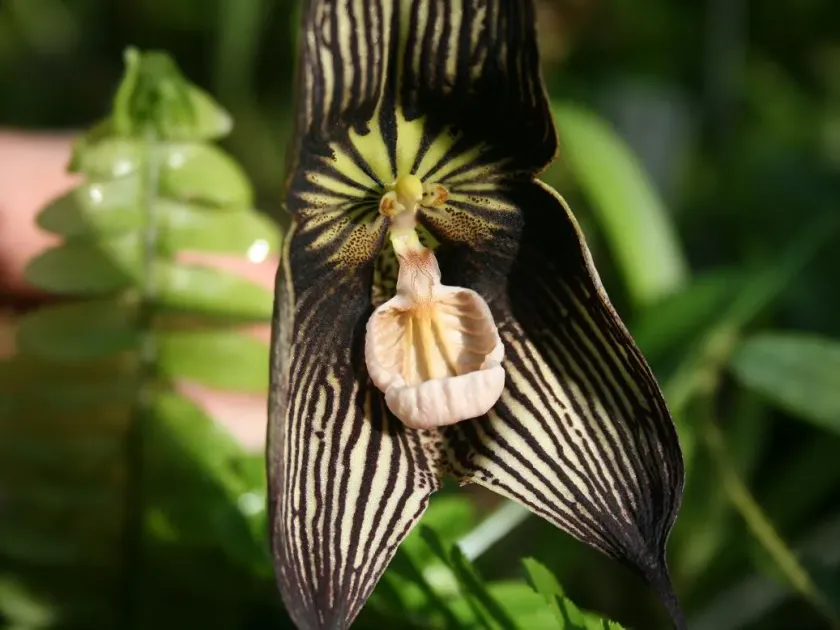
Description
Growing requirements
Dracula bella is a unique species of orchid belonging to the Orchidaceae family, native to the cloud forests of Colombia. As an epiphytic plant, it thrives in high-altitude environments where moisture is constantly provided by frequent mist and fog, making its cultivation demanding for home gardeners.
Botanically, the plant features a dense cluster of bright green, lanceolate leaves and lacks pseudobulbs, which means it requires constant moisture as it has no significant water storage organ. The most striking feature is its large, intricate flowers that hang downwards, necessitating specific container choices for proper development.
To successfully grow this orchid, one must provide a cool climate with daytime temperatures ranging from 18–22°C and significantly cooler nights. Maintaining high ambient humidity above 75% is essential for healthy growth and preventing the leaves from desiccating.
The potting medium must be loose, airy, and moisture-retentive, typically consisting of long-fiber sphagnum moss or high-quality bark chips. Because of the downward-growing inflorescences, open-slat wooden or plastic baskets are mandatory to allow the flower spikes to penetrate the bottom.
Bright, diffused light is required for photosynthesis, but direct solar exposure must be avoided to prevent thermal damage to the foliage. Good air circulation is equally important, as it helps prevent the accumulation of moisture that can lead to rot in the leaf axils.
Main diseases and pests
The primary threats to Dracula bella are fungal and bacterial infections caused by stagnant water or poor air movement. Crown rot is particularly dangerous, often starting when water is trapped in the center of the leafy rosette for prolonged periods.
Common pests include spider mites, which flourish in low-humidity indoor environments, and aphids that specifically target the developing flower buds. These pests can rapidly weaken the plant, making it susceptible to secondary infections from airborne pathogens.
Scale insects may also attach themselves to the stems or undersides of leaves, hidden from quick inspection. Regular monitoring of the foliage and the use of insecticidal soap or horticultural oil can effectively control these populations before they cause significant damage.
In cases of root rot, the plant must be removed from its basket, and all infected tissues carefully excised with a sterile blade. Treating the remaining healthy root system with a fungicide before repotting into fresh, clean substrate is critical for recovery.
Maintaining a clean growing area and isolating new plants are effective strategies for long-term health management. Consistent environmental monitoring ensures that the delicate balance required for this high-altitude species is preserved, preventing stress-related pest outbreaks.