
Wall rocket
Diplotaxis virgata
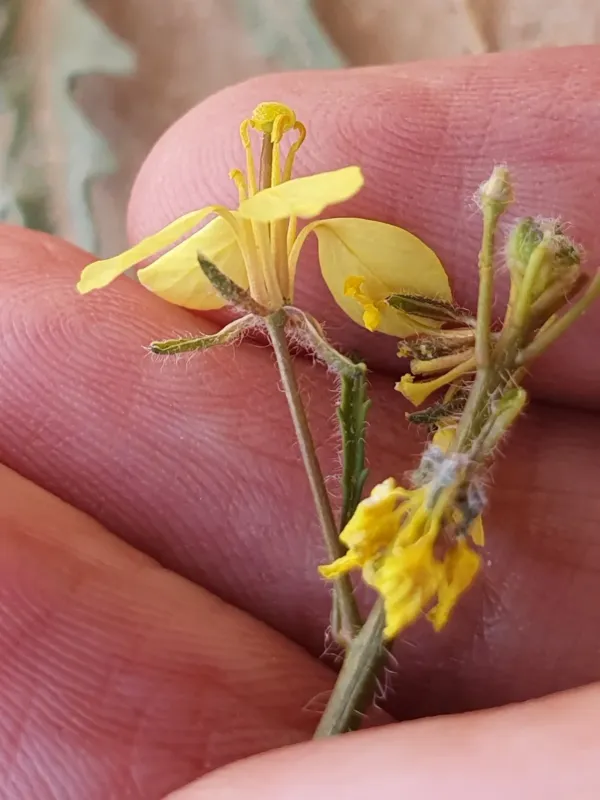
Description
Sowing dates
Wall rocket, a member of the Brassicaceae family, is a herbaceous plant that functions both as a wild herb and a potential cultivated leafy vegetable. For experimental or home garden production, sowing is best carried out in early spring as soon as soil temperatures reach 8–10 degrees Celsius.
The plant exhibits high self-seeding capabilities, so it is essential to manage plant density during the agricultural cycle. For early vitamin-rich harvests, overwintering sowing is often practiced, allowing the seeds to undergo natural stratification in the soil.
Seeds should be sown at a shallow depth of no more than 1–1.5 centimeters, as they are small and require good contact with moist soil layers. Under favorable conditions, germination typically occurs within 7–10 days post-seeding.
To encourage vigorous leaf growth, it is recommended to maintain row spacing of 20 to 30 centimeters. This provides necessary aeration and light penetration, which is critical for preventing lodging and the development of fungal diseases in dense stands.
In commercial cultivation, a sequential sowing method every 14 days can be used to ensure a constant supply of fresh greens throughout the growing season, until the onset of sustained intense summer heat.
Growing requirements
Wall rocket prefers well-drained, sandy, or light loamy soils with a neutral or slightly alkaline pH. The plant is highly sensitive to waterlogging, making fields with high water tables unsuitable for cultivation.
This crop is light-loving and requires open, sunny areas for optimal development. If light levels are deficient, the stems tend to stretch excessively, and the flavor of the leaves, which possess a characteristic mustard-like pungency, is significantly diminished.
The plant has moderate temperature requirements and shows high cold tolerance during early growth stages. The optimal growth temperature ranges from 15 to 22 degrees Celsius; higher temperatures trigger premature bolting and flowering.
While the plant can develop on poor substrates due to its deep taproot system, soil fertility remains important. Minimal nitrogen fertilization at the beginning of the vegetative stage is recommended for high-quality leafy yields.
Standard agronomic practices include regular inter-row cultivation to prevent soil crusting and to ensure root zone aeration. Irrigation should be moderate but regular, especially during the active leaf rosette formation phase.
Main diseases and pests
The most dangerous pest for this crop, as with many Brassicaceae members, is the flea beetle. It can destroy seedlings at the cotyledon stage within days during hot, dry weather conditions.
Significant damage can also be caused by various caterpillar species, such as cabbage white butterfly larvae and cutworms, which consume the leaf blades. Organic farming methods often utilize protective netting or biological agents based on bacterial pathogens for control.
Diseases are most commonly represented by powdery mildew and downy mildew, which thrive in high humidity and poor air circulation. Crop rotation is the most effective preventative measure against these infections.
Root rot can affect plants in heavy, overly wet soils, leading to wilting and the subsequent death of the entire leaf rosette. Maintaining optimal soil moisture balance and preventing standing water is essential for plant health.
- Prophylactic treatments with bio-fungicides.
- Removal of plant debris after the growing season.
- Maintaining proper spacing between rows to avoid mass infection.
Harvesting
Harvesting wall rocket occurs during the stage of leafy rosette formation, prior to the onset of the active flowering phase. At this time, the leaves are at their most tender and succulent, possessing an optimal balance of bitterness and spicy aroma.
Harvesting can be done by selectively cutting individual leaves or by cutting the entire rosette a few centimeters above the soil surface. The latter allows the plant to regenerate quickly, often yielding subsequent harvests.
Post-harvest, the produce should be cooled as rapidly as possible to prevent wilting. Greens can be stored in a cool place at temperatures between 0 and 2 degrees Celsius for several days without significant loss of quality.
If seed production is required, plants should be left in the field until the pods are fully mature. Wall rocket seeds are very small, have high germination rates, and retain their viability for a long period when stored in a dry place.
A crucial aspect of harvesting is preventing plants from overgrowing; as stems harden and flower stalks form, the leaves become tough and overly bitter, making them largely unsuitable for fresh culinary use.