
Chalk wall-rocket
Diplotaxis cretacea
Description
Growing requirements
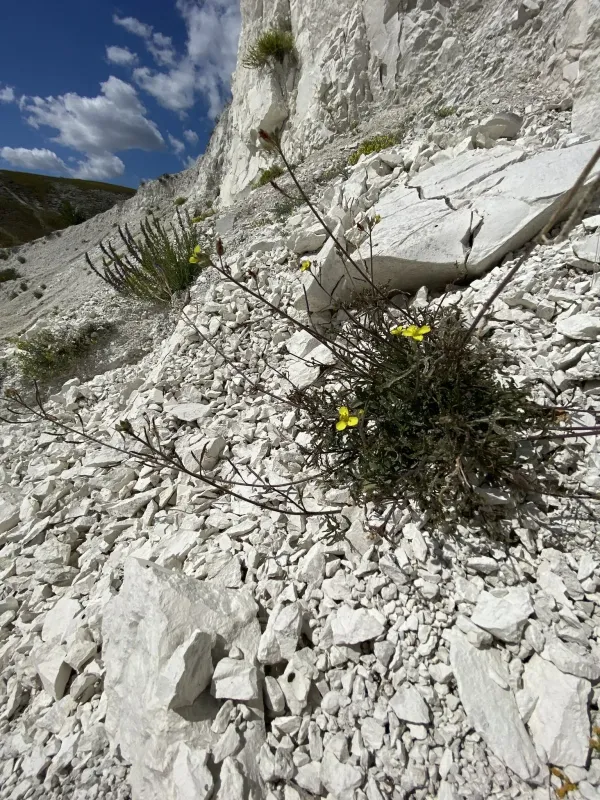
Chalk wall-rocket (Diplotaxis cretacea) is a member of the Brassicaceae family. It is a perennial herbaceous plant recognized for its specialization in thriving on chalky substrates, making it an obligate calciphile.
The plant features a deep taproot system, which serves as a vital adaptation for accessing water and essential minerals in the nutrient-poor, carbonate-rich soils characteristic of its native habitat.
For successful cultivation, the species requires well-drained, alkaline soils. It is highly adapted to high-calcium environments and performs best in locations that mimic the harsh, erosion-prone conditions of its origin.
Climatic requirements are centered on high solar exposure. As a plant of open steppe habitats, it does not tolerate shaded environments or waterlogged soils, as these conditions inhibit its natural metabolic processes.
Agricultural management should prioritize minimal soil disturbance and the maintenance of open spaces to prevent competition from invasive weeds, which can quickly overwhelm the relatively slow-growing seedlings.
Main diseases and pests
Crucifer flea beetles represent the most significant pest pressure for this species, particularly during the early vegetative stages when the leaves are young and tender.
Fungal pathogens such as downy mildew and various root rot fungi can become problematic if the soil moisture levels are not carefully managed to prevent excess humidity.
Aphids can occasionally cluster on the inflorescences, potentially reducing seed production if the infestation is not controlled during the flowering stage of the plant.
Implementing an integrated pest management (IPM) strategy, which includes monitoring and the use of bio-rational pesticides, is recommended to ensure plant health without disrupting the local ecology.
Good cultural practices, such as maintaining adequate plant spacing and ensuring proper airflow, are fundamental in reducing the risk of disease outbreaks within the crop stands.