
Sourgrass
Digitaria insularis (L.) Fedde
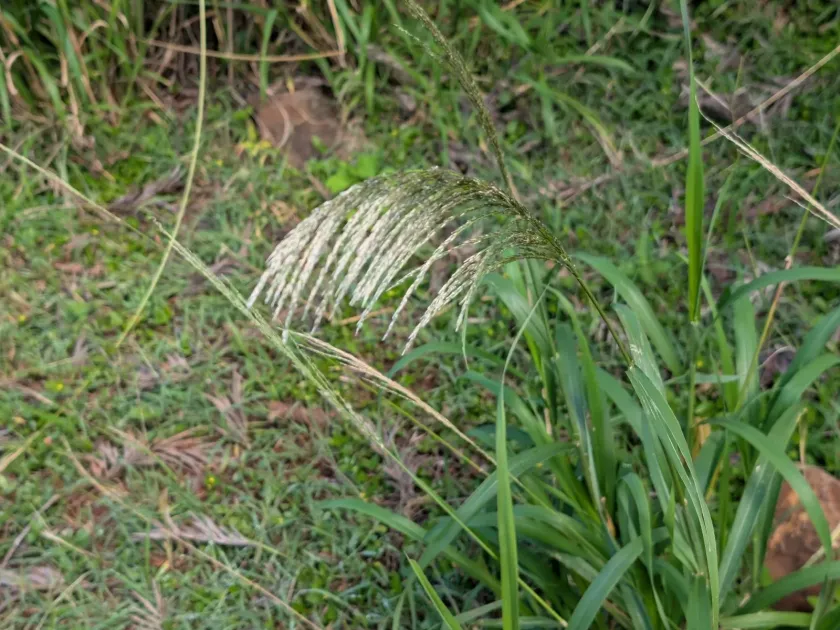
Description
Growing requirements
Sourgrass (Digitaria insularis) is a highly aggressive perennial grass species belonging to the Poaceae family. Native to tropical and subtropical regions of the Americas, it has become a major concern for modern agriculture.
The plant thrives in a variety of soil types, ranging from sandy to clay-rich, and displays remarkable adaptability to different climatic conditions. It requires high light intensity for optimal vegetative growth and reproductive success.
Its botanical structure includes a dense, shallow to mid-deep rhizome system, which acts as a storage organ for carbohydrates and promotes survival in adverse environmental conditions.
Reproduction occurs primarily through millions of wind-dispersed seeds, though it can also propagate vegetatively through rhizome segments left after mechanical operations.
Once established, the plant exhibits superior vigor compared to many crop species, allowing it to quickly dominate open spaces in fields and outcompete young seedlings for essential nutrients and water.
Main diseases and pests
The most significant challenge for farmers is the evolution of glyphosate resistance in Digitaria insularis populations, which has rendered traditional chemical control methods ineffective in many regions.
The weed acts as a host for various pathogens and pests, although direct damage to the weed itself is usually negligible, making the plant a persistent reservoir for agricultural problems.
Effective management requires a proactive strategy that utilizes pre-emergence herbicides, diverse modes of action, and crop rotation to mitigate the selection pressure for resistant weeds.
Integrated weed management (IWM) techniques, including cover crops, can help suppress its growth by shading out the ground and preventing seed germination.
Scouting fields for early detection is crucial; once established in a field, the rhizomes make it extremely difficult to eradicate without sustained, multi-year interventions.