
Digitaria eriantha
Digitaria eriantha Steud.
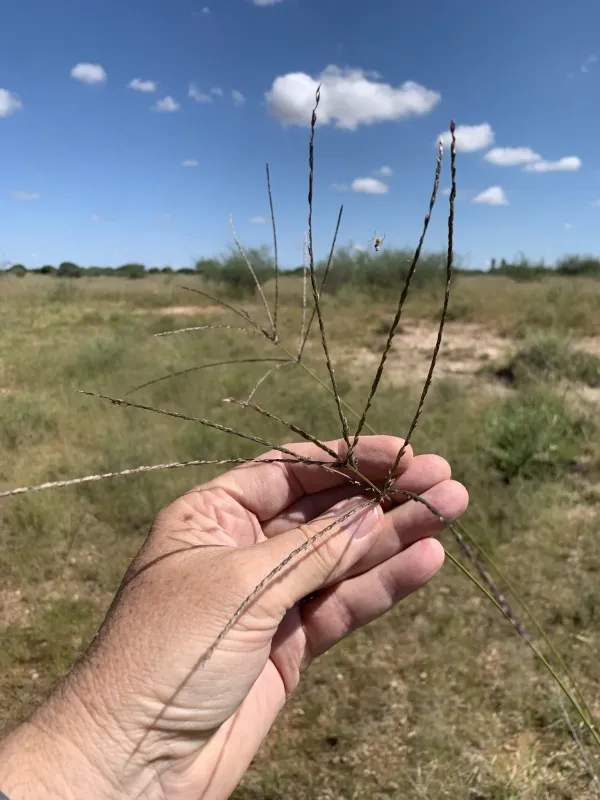
Description
Sowing dates
Digitaria eriantha, commonly known as woolly finger grass, is a perennial grass species belonging to the Poaceae family. It is highly valued in agriculture for its exceptional forage quality, drought tolerance, and adaptability to various soil types.
The establishment of this crop requires warm temperatures, as it is a tropical and subtropical grass. Sowing should be carried out when the soil is sufficiently warmed, typically during the spring or early summer to ensure rapid germination and early development.
Seedbed preparation is vital for successful establishment. Since the seeds are small, they require a fine, firm, and weed-free seedbed to ensure optimal contact with the soil. Deep sowing should be avoided to prevent seed failure.
In addition to traditional seeding, the grass can also be established through vegetative propagation using rooted cuttings, which is common in areas where seed availability is limited or where rapid ground cover is required to prevent erosion.
Proper plant density is critical for achieving a high-quality stand. Uniform distribution of seeds across the field helps in suppressing early-season weeds and promotes the development of a thick, uniform mat of forage suitable for grazing or hay production.
Growing requirements
This grass thrives in warm climates and is particularly noted for its ability to persist in regions with erratic rainfall. It is well-adapted to different environments, ranging from coastal areas to high-altitude inland regions, provided there is adequate light.
Soil requirements are relatively flexible, though the plant performs best on well-drained soils. While it can tolerate sandy soils and loams, it does not perform well in waterlogged areas, as stagnant water can damage the root system and reduce overall vigor.
Digitaria eriantha prefers soil pH levels ranging from slightly acidic to neutral. In nutrient-deficient soils, the application of phosphorus and nitrogen fertilizers significantly boosts growth rates and enhances the nutritional quality of the forage.
Sunlight exposure is essential for the healthy growth of woolly finger grass. Shaded environments inhibit photosynthesis, leading to reduced tillering and lower dry matter production, which directly impacts the economic return of the crop.
Maintenance of the stand requires proper management of soil fertility. Periodic soil testing is recommended to adjust nutrient levels and ensure that the grass receives the essential elements required for sustained high-performance forage production.
Yield
The yield potential of Digitaria eriantha is significant, making it a preferred choice for intensive livestock systems. It is known for its high protein content and palatability, which remain relatively stable even as the plant matures during the growing season.
Grazing management is a key factor in maximizing yield. By implementing rotational grazing, farmers can ensure that the grass has sufficient recovery time between grazing events, which maintains the root reserves and extends the productive life of the pasture.
When harvested for hay, the grass produces a high-quality feed that is easily digested by cattle and sheep. Proper timing of the harvest, usually at the early flowering stage, is critical to balance the quantity of the biomass with the protein content.
The plant is also suitable for silage production, provided it is harvested at the right moisture content and properly compressed to facilitate lactic acid fermentation, which preserves the nutrients for long-term storage and winter feeding.
Average annual yields vary based on environmental inputs and management practices but are consistently high in well-maintained stands, providing a reliable source of feed that supports livestock growth and milk production throughout the year.
Main diseases and pests
While generally hardy, the crop can be susceptible to fungal diseases such as rust, especially under conditions of high humidity or poor air circulation within the stand. Regular mowing or grazing helps manage the canopy and reduce the risk of infection.
Insect pests typically cause minimal economic damage but should be monitored. Occasional outbreaks of foliage-feeding insects may occur, and integrated pest management practices are usually sufficient to control any significant threats to the stand.
Weed competition is the primary threat during the establishment phase. Because the grass grows slowly in its early stages, utilizing herbicides or mechanical weeding is necessary to prevent invasive plants from outcompeting the young seedlings.
Overgrazing is a significant risk that can degrade the pasture. Continuous heavy grazing depletes root carbohydrate stores, leading to plant mortality and thinning of the stand, which subsequently invites weeds to colonize the open patches.
Sustainable management practices, such as resting periods for the pasture and appropriate fertilizer application, are the most effective ways to maintain a healthy and vigorous stand that is resistant to common agricultural threats.
Harvesting
Harvesting for hay should be performed when the nutritional value is at its peak. This usually occurs before the grass becomes too stemmy. Using modern mowers with conditioning capabilities helps speed up the drying process and retains leaf quality.
For seed production, harvesting is more complex due to the shattering nature of the seed heads. Timing is crucial; seeds should be harvested when they are fully mature but before they naturally drop from the plant, requiring specialized combine settings.
In grazing scenarios, the harvest is continuous throughout the growing season. Maintaining a residual height of about 7-10 centimeters after grazing encourages rapid regrowth and protects the crown of the plant from excessive heat and drying.
Ensuring the harvest occurs in favorable weather is vital for quality. Dry conditions during haying prevent molding and ensure that the harvested material retains its nutritional value, which is essential for high-performance animal diets.
Strategic end-of-season management, including ensuring the grass goes into dormancy with sufficient root reserves, ensures that the stand survives the winter or dry season in good condition and is ready to resume growth quickly when conditions improve.