
Natal fingergrass
Digitaria natalensis Stent
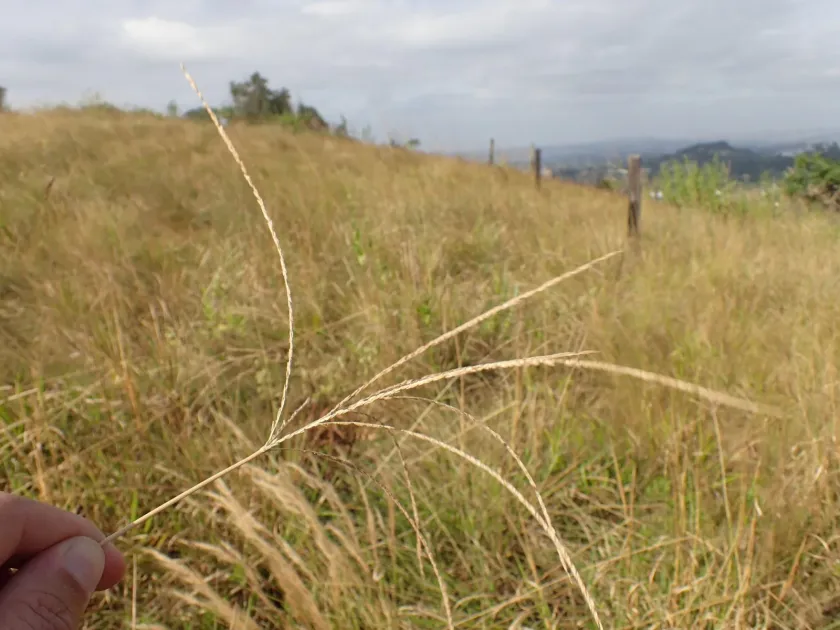
Description
Sowing dates
Natal fingergrass is a warm-season perennial grass that requires specific temperature conditions during the initial establishment phase.
Sowing should ideally occur in late spring or early summer when soil temperatures are consistently above 20 degrees Celsius to support rapid germination.
The seeds are relatively small and need to be sown at a shallow depth to ensure they are not buried too deeply to emerge effectively.
Preparation of a fine, firm seedbed is crucial to facilitate the necessary soil-to-seed contact, which promotes uniform growth across the field.
In regions with predictable rainfall patterns, planting just before the wet season significantly improves the establishment success of this species.
Growing requirements
Belonging to the Poaceae family, Digitaria natalensis is native to Southern Africa and is highly adapted to subtropical climate conditions.
It is well-regarded for its drought tolerance, allowing it to persist in environments where more sensitive grass species often fail due to moisture stress.
This grass thrives in well-drained soils, ranging from sandy textures to loamy profiles, and it is capable of tolerating a wide range of soil pH levels.
While it prefers full sun exposure for optimal photosynthesis and dry matter production, it shows reasonable tolerance to partial shading.
Effective management requires appropriate nitrogen application, which boosts both the tiller density and the overall nutritional value of the forage.
Yield
The productivity of Natal fingergrass makes it a preferred choice for improving permanent pastures and enhancing livestock nutritional intake.
It responds well to rotational grazing, where precise control over the grazing duration leads to consistent regrowth cycles throughout the season.
When managed as a hay crop, the species can yield substantial biomass provided that moisture is not the primary limiting factor during the growing phase.
High forage quality is maintained when the crop is harvested at the vegetative stage, which ensures maximum energy and protein availability.
Strategic fertilizer application and proper management of the stand density can significantly lift the annual yield per hectare for the producer.
Main diseases and pests
Like many perennial grasses, Natal fingergrass can be affected by various fungal pathogens that thrive in warm, humid weather conditions.
Pest pressures are usually manageable, but continuous monoculture systems may lead to an accumulation of insects affecting root health.
- Rust fungi causing leaf spots and reduction in vigor.
- Root-knot nematodes in specific sandy soil conditions.
- Various lepidopteran larvae feeding on foliage.
- Aphids that can colonize the succulent parts of young growth.
Implementing a proper grazing rotation schedule is an effective cultural method to break the life cycle of many common pests and diseases.
Early detection and scouting are essential for maintaining the health of the stand and ensuring the longevity of the pasture system.
Harvesting
The timing of the harvest is critical; cutting should be performed before the plant initiates its reproductive phase to maximize quality.
As the plant transitions to flowering, the lignification of the stems increases, which drastically reduces the digestibility of the forage for livestock.
For grazing purposes, maintaining the stubble height after livestock movement is vital for preserving the plant's carbohydrate reserves for future regrowth.
Hay production requires efficient drying methods to prevent nutrient losses caused by rain or prolonged exposure to high temperatures after cutting.
Proper harvest management not only preserves the nutritive value but also protects the overall vigor and productivity of the Natal fingergrass stand.