
Southern crabgrass
Digitaria ciliaris (Retz.) Koeler
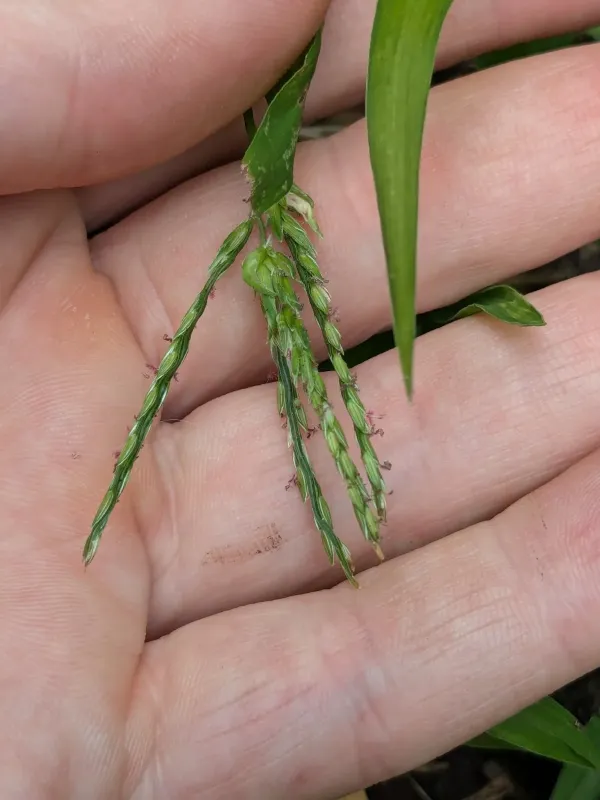
Description
Sowing dates
Southern crabgrass is a warm-season annual grass that thrives in high temperatures. Germination typically begins in late spring or early summer once soil temperatures consistently exceed 15-18°C, ensuring rapid and uniform establishment of the seedlings.
Seeds of this species exhibit high dormancy and can germinate from a depth of up to 5 cm, making shallow tillage often ineffective for control. Because germination is spread over a long period, managing the population requires repeated interventions throughout the early season.
When cultivated as a forage crop, planting should occur only after all risks of frost have passed. Providing optimal soil moisture during the seeding phase is critical for maximizing biomass production and achieving a dense stand that suppresses competing weeds.
Proper field preparation, including light harrowing during the early emergence phase, is highly effective in reducing initial population density. This mechanical intervention should be carefully timed to target the seedlings before they develop a deep root system.
Light availability is a primary driver of growth rates in young plants. While crabgrass can establish in various conditions, it grows most aggressively in high-light environments, which dictates the timing of planting and spacing in managed agricultural systems.
Growing requirements
Belonging to the Poaceae family, Southern crabgrass is remarkably adaptable to various soil textures but prefers well-drained, fertile substrates. It is commonly found in sandy loams where its branching root system can easily penetrate and anchor the plant.
The plant is highly responsive to nitrogen availability, often serving as an indicator of high soil fertility or intensive fertilization programs. It thrives in neutral to slightly acidic pH conditions and is notably sensitive to sustained waterlogging, which can inhibit its development.
Southern crabgrass is characterized by its high tolerance to heat and solar radiation. Unlike many cool-season crops, it maintains high metabolic rates even during intense summer temperatures, provided that soil moisture remains within a manageable range for the plant.
Its ability to form adventitious roots at the stem nodes allows it to survive in disturbed soils and efficiently access moisture. This biological mechanism makes it a persistent plant in agricultural fields, roadsides, and areas with heavy human traffic.
Although it is a sunlight-demanding species, its aggressive growth allows it to overtop slower-growing crops. Managing shade is a key control strategy; maintaining a high crop canopy density can naturally suppress the development of crabgrass within the field.
Yield
In regions where Southern crabgrass is used as a forage crop, it is valued for its rapid biomass accumulation. Under proper management, including adequate nitrogen inputs and moisture, it can produce multiple cuttings throughout the summer season.
The yield potential is significant due to its high tillering capacity, which allows it to cover bare ground quickly. In ideal conditions, this grass can outperform many traditional forage species in terms of volume, especially during the peak of the heat season.
However, the nutritional value of the biomass is highly dependent on harvest timing. As the plant transitions into its reproductive stage, the concentration of lignin increases significantly, which reduces digestibility for livestock and lowers overall forage quality.
Seed production is one of the most prolific traits of this species. A single healthy plant can produce tens of thousands of seeds in one season, making it a highly effective colonizer and a challenging weed for crop management programs.
When used for silage or hay, processing must be efficient to preserve nutrient content. Given its growth habit, uniform harvesting is essential to ensure that the material is not contaminated with soil or debris, which could negatively impact animal feed quality.
Main diseases and pests
Southern crabgrass is generally robust against many common fungal pathogens that affect temperate grains. However, it serves as a critical alternative host for various viral diseases, such as cereal mosaic viruses, which can then spread to primary crops.
Pests, particularly aphids and various grass-feeding insects, utilize crabgrass as a bridge host, allowing their populations to thrive throughout the summer months. This creates a continuous infection pressure on neighboring cereal fields and other susceptible crops.
Environmental stress, especially prolonged periods of high humidity combined with heat, can promote the development of leaf spot diseases. While these rarely kill the plant, they reduce the photosynthetic efficiency and lower the overall biomass harvest quality.
Integrated weed management is necessary to control the species within agricultural landscapes. This includes the strategic use of pre-emergent and post-emergent herbicides, alongside crop rotation patterns that interrupt the life cycle of the grass.
Scouting for early infestations on field edges and irrigation ditches is a vital preventive measure. By keeping these buffer zones free of crabgrass, farmers can significantly decrease the seed rain entering the main crop production areas.
Harvesting
Harvesting for forage should be prioritized before the plant enters the flowering stage. Cutting during the vegetative growth phase ensures high protein content and digestibility, making it a viable and nutritious feed source for cattle and other ruminants.
Mechanized harvesting requires sharp equipment to cleanly cut the stems, which can be tough even at early maturity stages. After cutting, rapid drying is essential to prevent mold growth, especially in humid or high-rainfall climates common to its native range.
In fields where crabgrass is treated as a weed, harvest operations should be conducted to minimize the spread of seeds. Cleaning harvesting equipment before moving from infested fields to clean ones is a standard practice to prevent cross-contamination of fields.
Post-harvest management of fields involves thorough soil cultivation to encourage any remaining seeds to germinate in the autumn, where they can be destroyed by cold temperatures or subsequent tillage operations before the next crop cycle.
Storage of the collected forage must be done in a dry environment with proper ventilation. Due to the high moisture content of fresh grass, failing to dry it sufficiently can result in spontaneous heating and significant losses of forage mass during storage.