
Fonio
Digitaria exilis (Kippist) Stapf
Description
Sowing dates
Sowing fonio typically begins at the onset of the rainy season, which is essential for ensuring the moisture levels required for the germination of its tiny seeds. Farmers carefully monitor the first rains to determine the optimal window for planting.
Due to the extremely small size of the seeds, they are sown by broadcasting them over a prepared field. The soil is then lightly raked or trodden to ensure that the seeds make sufficient contact with the ground for rooting.
Precise timing is vital, as the crop needs to complete its vegetative cycle before the rains cease. Planting too late can result in insufficient moisture during the crucial maturation phase, significantly impacting total yield.
Farmers often use a high seeding rate to ensure a dense stand that can naturally compete with weeds. This is an important strategy because the plant grows slowly during its initial stages and is sensitive to competition.
Strategic planting dates also assist in aligning the harvest period with drier weather, which is necessary for the proper drying and processing of the delicate grain after it has been harvested.
Growing requirements
Fonio (Digitaria exilis) is a member of the Poaceae family and is widely regarded as one of Africa's oldest and most sustainable grain crops. It is highly valued for its ability to thrive in poor, sandy soils where other staples would fail.
The crop requires a tropical climate with temperatures generally ranging between 25 and 30 degrees Celsius. It is particularly well-adapted to environments with distinct wet and dry seasons, showing remarkable resilience during short periods of water stress.
Fonio prefers light-textured, well-draining soils. It is highly susceptible to waterlogging, so it is usually planted on well-drained slopes or elevated terrain to prevent root rot caused by stagnant water.
The plant is known for its ability to grow in nutrient-depleted soil, requiring minimal to no chemical fertilization. This low-input requirement makes it an ideal crop for subsistence farming systems in various West African regions.
Traditional agricultural practices, such as crop rotation, are frequently employed to maintain soil health. Fonio often follows or precedes other crops to balance the nutrient demand and suppress pest populations in the field.
Yield
The yield of fonio typically ranges from 500 to 800 kilograms per hectare. While this may seem modest compared to high-input modern crops, it is a significant output given the marginal soil conditions and minimal resources required for its cultivation.
Yield stability is one of the primary reasons farmers continue to cultivate this crop. Even in poor seasons, fonio often manages to produce a harvestable amount of grain, acting as a critical buffer against food insecurity.
A major limiting factor for total yield is the tendency of the grain to shatter when fully ripe. Harvesting must be timed precisely to avoid losing a portion of the crop to the ground during the final days of maturation.
The nutritional profile of fonio is exceptional, containing high levels of essential amino acids like methionine. This high quality makes it a premium product in global health food markets, increasing its economic value.
Post-harvest processing is the biggest bottleneck in production. The grain's tough outer husks are difficult to remove, and modern mechanical hulling solutions are currently being developed to improve the efficiency of grain recovery.
Main diseases and pests
Fonio is generally considered a hardy crop with relatively few pest and disease problems compared to more domesticated cereals. This resistance is a result of centuries of adaptation to the diverse environments of West Africa.
Weeds are the primary threat, particularly during the first month of growth. Because fonio grows slowly initially, farmers must perform diligent weeding to prevent the crop from being choked out by more aggressive native grasses.
Fungal infections can occur if the harvest period is marked by excessive rainfall or high humidity. These conditions promote the growth of molds on the grain clusters, which can degrade the nutritional value and marketability of the crop.
Stored grain pests, such as various species of weevils, represent a significant danger if the grain is not dried properly. Once infested, these insects can rapidly destroy large proportions of the household storage.
Preventative measures center on good field hygiene, early harvesting to avoid late-season humidity, and the use of well-ventilated storage containers that keep the moisture level low and protect the grain from external contamination.
Harvesting
Harvesting is a manual process involving the use of sickles to cut the mature panicles. Farmers collect the stalks in bundles, which are then placed in the sun for several days to undergo further drying.
Once dried, the grain is threshed to separate it from the stalks. This is typically done on large mats or clean, hard surfaces. Due to the tiny size of the grain, this stage requires a high degree of care to ensure minimal loss.
The winnowing process is then used to remove the lighter chaff and debris from the heavier grain. The natural wind or controlled hand-fanning is often employed, requiring great skill from the workers to clean the harvest effectively.
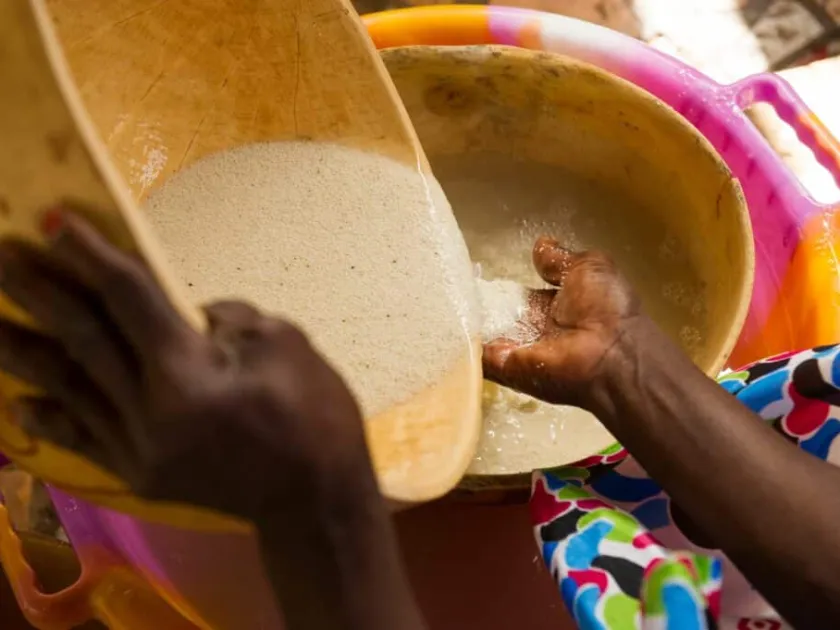
Hulling remains the most labor-intensive step. Traditional methods involve pounding the grain in a mortar with sand to abrade the outer husks, followed by repeated washing and rinsing to remove both the sand and the debris.
Advancements in mechanical hulling technology are slowly transforming the industry. By reducing the time required for cleaning, these machines allow farmers to bring more product to market and increase the overall profitability of fonio cultivation.