
Large crabgrass
Digitaria sanguinalis (L.) Scop.
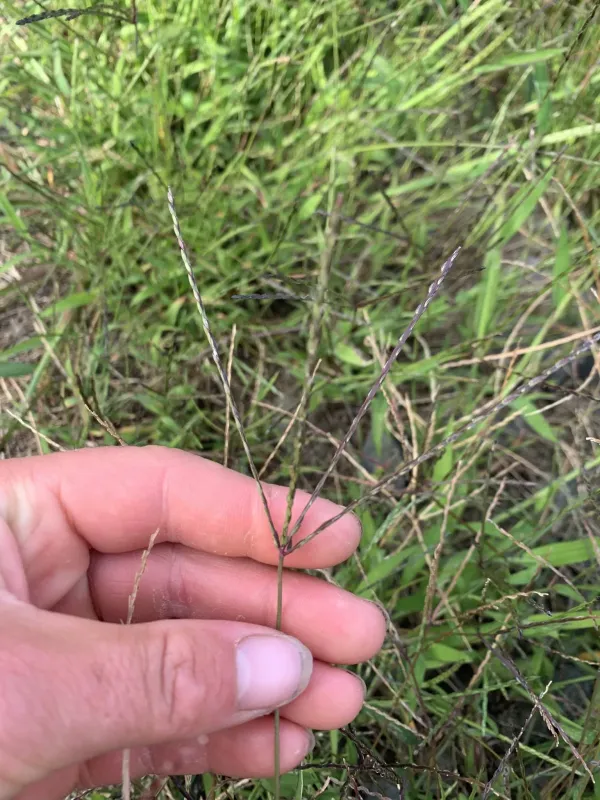
Description
Growing requirements
Large crabgrass (Digitaria sanguinalis) is an annual grass species belonging to the Poaceae family. It is recognized globally as a highly invasive weed, particularly in row crops and open agricultural fields.
The plant exhibits remarkable adaptability, thriving in diverse climates and soil types. It prefers warm temperatures and thrives in sunny areas, making it a persistent problem in intensive agricultural systems.
Botanically, it is characterized by creeping stems that root at the nodes, forming dense mats that suppress other vegetation. The leaves are typically broad, light green or purple-tinted, often covered with short hairs.
Regarding climate requirements, crabgrass thrives in high-temperature environments. It requires significant moisture during germination but shows high drought tolerance once established in the soil.
In terms of agricultural use, while sometimes grazed by livestock in extensive systems, it is generally considered a nuisance that significantly reduces crop yields through severe nutrient and light competition.
Main diseases and pests
Large crabgrass acts as a host for various pathogens, including viruses and fungal diseases that affect major cereal crops. It serves as a bridge for these diseases to persist throughout the growing season.
Various insect pests, such as grasshoppers and specific aphids, utilize crabgrass as a primary food source or shelter. This influx of insects can lead to secondary infestations in nearby cash crops.
The primary threat is its aggressive growth rate. It develops deep root systems quickly, allowing it to monopolize soil moisture and minerals, which is particularly detrimental to young corn and soybean plants.
Management strategies focus on pre-emergence and post-emergence herbicide applications. Integrating cultural practices like crop rotation and canopy management is essential for long-term suppression.
Because of its ability to produce vast quantities of seeds that remain viable in the soil for several years, a sustained, multi-year weed management plan is strictly necessary to prevent infestation.