


Reference · Crops
Descurainia
Descurainia Webb & Berthel.
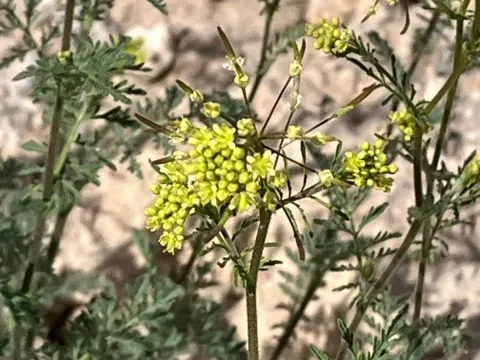
Descurainia is a genus of flowering plants belonging to the Brassicaceae family. The most well-known representative, Descurainia sophia, is an annual herb characterized by its deeply dissected, feathery leaves and small yellow flowers.
2
items
What the section contains
Marketplace
Products in this section · 12


Descurainia
The genus has a cosmopolitan distribution, thriving across diverse climatic zones ranging from temperate Eurasia to North America. It is exceptionally well-adapted to variable environments, exhibiting a high degree of phenotypic plasticity.
Regarding soil requirements, the plant shows a preference for well-drained, nutrient-rich soils but is known for its ability to colonize disturbed and marginal lands. It is highly drought-tolerant, making it a persistent presence in arid landscapes.
The plant exhibits rapid phenological development, often germinating early in the spring. Its deep taproot system allows it to efficiently extract water and mineral resources from deep soil horizons, giving it an advantage over many competing plant species.
Historically, Descurainia has been utilized for its medicinal properties and oil-producing seeds. In agricultural contexts, it is sometimes managed for its role as a honey plant, providing crucial early nectar for pollinators.
Like many members of the mustard family, Descurainia is highly susceptible to flea beetles, which can cause severe defoliation during the seedling stage. These pests are particularly active during warm, dry spring weather.
Aphids represent another significant threat, colonizing the stems and inflorescences to extract sap. Such infestations can lead to stunted plant growth, deformed flowers, and a substantial reduction in seed production.
Fungal pathogens such as downy mildew and white rust are common in environments with high humidity. These diseases manifest as lesions on the foliage, eventually leading to chlorosis and potential tissue necrosis if left untreated.
Integrated pest management strategies are essential for handling high populations of pests. This includes the use of selective insecticides and the maintenance of adequate spatial distribution to reduce micro-humidity levels around the plants.
Crop rotation remains the primary cultural control method. By avoiding continuous planting of Brassicaceae species in the same field, growers can significantly break the life cycles of common pests and soil-borne pathogens.