
Western tansymustard
Descurainia pinnata (Walter) Britton
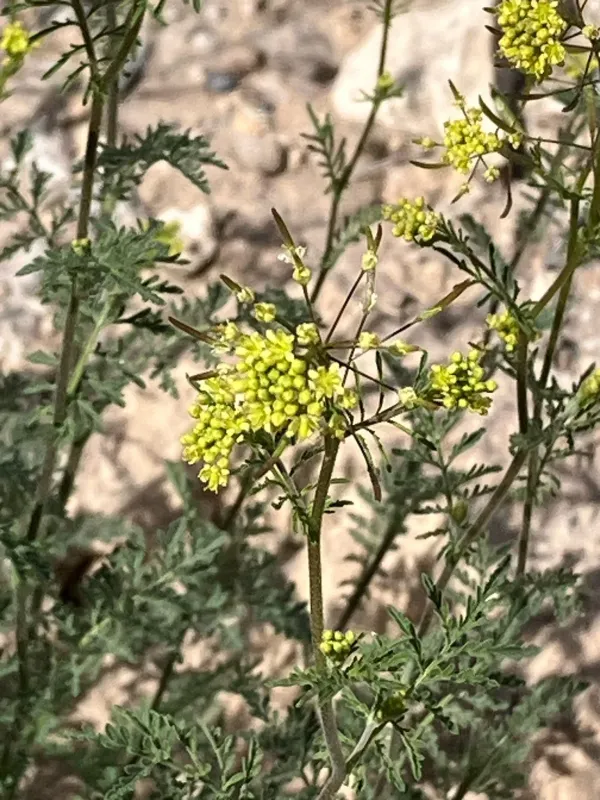
Description
Sowing dates
Seeds of Western tansymustard are sown primarily in the autumn or early spring, as soon as the soil reaches physical maturity. The plant shows excellent germination at moderate temperatures, making it suitable for regions with cool spring climates.
Sowing depth should be minimal, about 0.5–1 cm, as the fine seeds require good contact with moist substrate. When sown in the autumn, the crop manages to form a leaf rosette, which increases its winter hardiness.
The recommended seeding rate is about 4–6 kg per hectare for row cropping. It is important to ensure uniform distribution of seeds to avoid overcrowding, which promotes the development of fungal diseases.
For spring sowing, the soil requires thorough leveling and compaction to create an optimal seedbed. Adherence to sowing dates is critical, as the crop is sensitive to the drying out of the topsoil during the germination phase.
Under production conditions, it is advisable to use precision seeders adjusted for small seeds. This ensures uniform emergence and facilitates subsequent crop maintenance.
Growing requirements
Western tansymustard belongs to the Brassicaceae family and prefers well-drained, fertile loamy or sandy soils. It shows high plasticity, successfully adapting to both neutral and slightly alkaline soil types.
The crop is light-loving and requires open areas, avoiding shading by taller neighbors. In conditions of insufficient light, the stems become elongated, which leads to a decrease in overall green mass yield.
The temperature regime for optimal growth varies between 15–22 degrees Celsius. The plant can withstand short-term frosts in the rosette phase, making it suitable for cultivation in continental climates.
Soil moisture should be maintained at a moderate level throughout the growing season. The crop reacts extremely negatively to waterlogging, which quickly leads to root system rot.
Successful vegetation requires moderate fertilization with nitrogen and phosphorus. An excess of nitrogen during the seed maturation period is not recommended as it may cause stem lodging.
Yield
The green mass yield of Western tansymustard depends on the level of agrotechnics and local climatic conditions. With proper irrigation and timely fertilization, results can reach significant volumes.
When grown for seeds, the average yield ranges from 0.8 to 1.5 tons per hectare. This figure heavily depends on how successfully the plant passes through the flowering and pod formation period.
An important factor influencing the final harvest is the activity of pollinators, as the plant needs cross-pollination for maximum productivity. In industrial scales, placing beehives near fields is a common practice.
The biological productivity of the plant allows it to be used as an early source of green forage for livestock. The high growth rate of vegetative mass makes the crop promising for conveyor-style production.
Yield results show that using modern cultivars can increase output by 20–30% compared to wild forms. Breeding programs are currently focusing on improving resistance to seed shattering.
Main diseases and pests
The main threats to Western tansymustard are related to pests characteristic of the Brassicaceae family. The most dangerous is the flea beetle, which can destroy crops at the cotyledon stage.
During the active growth period, the crop is often damaged by caterpillars of the diamondback moth and cabbage white butterfly. Regular monitoring of the crops allows for the timely application of biological or chemical protection measures.
Among diseases, downy mildew and alternaria leaf spot are the most common, occurring under conditions of high air humidity. Preventive measures include crop rotation and avoiding dense planting.
Root rot can occur when soil drainage is poor. This disease is difficult to treat, so the emphasis is on soil improvement and the use of high-quality, treated seed material.
- Flea beetles
- Diamondback moth
- Downy mildew
- Alternaria
- Root rot
Harvesting
Seed harvesting is conducted during the wax maturity phase, when pods acquire their characteristic color but have not yet begun to shatter. It is important not to miss this moment, as seeds shatter easily upon mechanical impact.
Harvesting is performed using direct combining or pre-swathing. Swathing is preferred in unstable weather conditions, as it allows the plant mass to dry naturally.
When using combines, precise adjustment of drum speed is necessary to minimize cracking of the fine seeds. Quality cleaning of the grain mass immediately after harvest is mandatory to preserve seed characteristics.
Harvested seeds require mandatory drying in well-ventilated areas until the moisture content is no more than 9–10%. This prevents spoilage during storage in warehouses.
Harvesting green mass for forage purposes is conducted in the budding phase, before the onset of flowering. It is during this period that the plant possesses maximum nutritional value and optimal succulence of the leaves.