
Dendrobium unicum
Dendrobium unicum
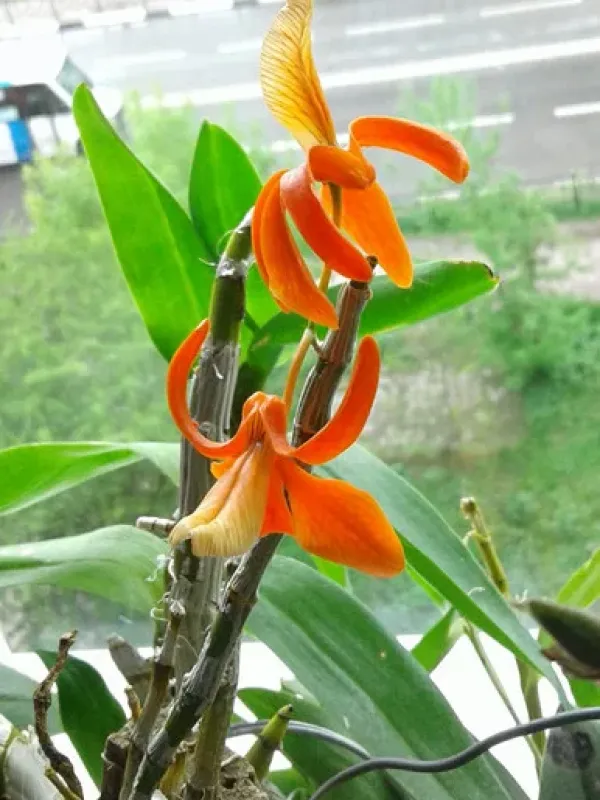
Description
Growing requirements
Dendrobium unicum is a unique epiphytic orchid species belonging to the Orchidaceae family. It is native to the mountainous regions of Southeast Asia, specifically spanning across Laos, Thailand, and Vietnam, where it thrives in high-humidity environments on tree trunks.
Botanically, this species is defined by its small, spindle-shaped pseudobulbs that typically reach 5 to 15 centimeters in length. It is a deciduous plant, which means it naturally loses its leaves during the rest period to prepare for the blooming phase, characterized by striking, bright orange flowers.
Successful cultivation requires strict adherence to climate parameters, specifically high relative humidity (above 60%) and consistent airflow. Temperature fluctuations, particularly cooler nights during the resting phase, are essential to trigger the floral induction process for the next season.
The substrate must be highly porous, typically composed of fine bark, charcoal, and sphagnum moss. Due to its epiphytic nature, Dendrobium unicum is often mounted on cork slabs or grown in baskets, which prevents water accumulation around the roots and ensures optimal aeration.
Light requirements for this species are relatively high. It thrives in bright, filtered light. During the winter months in non-tropical regions, supplementary LED lighting is often necessary to prevent the pseudobulbs from etiolating and to ensure the plant stores enough energy for its signature orange blooms.
Main diseases and pests
The most common pests affecting this species include spider mites and scale insects, which often thrive in environments with poor air circulation. Regular inspection and the application of appropriate horticultural oils or systemic pesticides are recommended to control potential infestations.
Pathogenic threats are usually related to root and pseudobulb rot caused by waterlogged conditions. Ensuring a proper wet-dry cycle is critical, as stagnant moisture in the root zone is the most frequent cause of mortality for this orchid in greenhouse environments.
Harvesting
The primary utility of this culture is ornamental. It is a prized specimen among orchid hobbyists and botanical gardens due to its compact size, vibrant floral display, and distinct citrus-like fragrance, making it a staple in specialized collections of Asian epiphytes.