
Dendrobium aduncum
Dendrobium aduncum
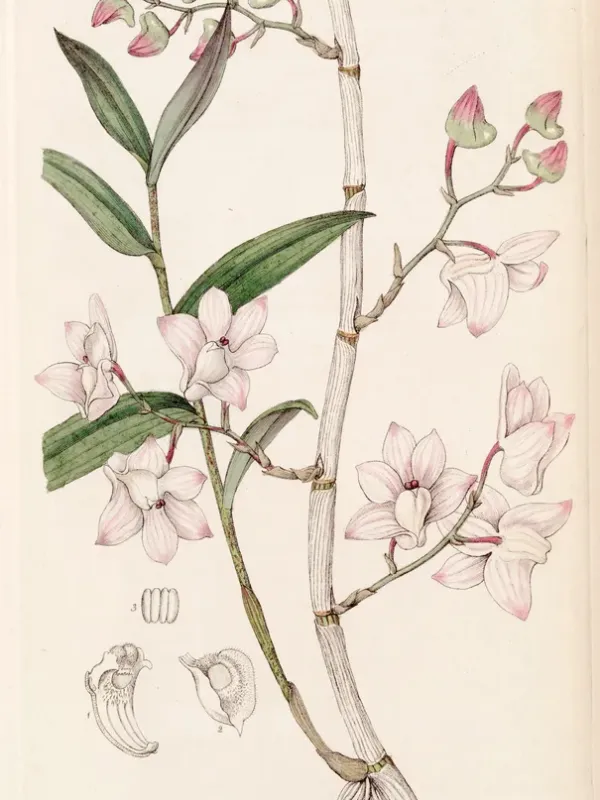
Description
Growing requirements
Dendrobium aduncum is a fascinating perennial epiphytic plant belonging to the Orchidaceae family. Native to the subtropical and tropical regions of Asia, including China and Vietnam, this species has adapted to grow on trees and rocks, relying on its specialized root system to absorb moisture from its environment.
Botanically, this orchid is defined by its slender, pendulous stems that can grow quite long. It features thin, lanceolate leaves and produces clusters of small, fragrant flowers characterized by a distinctive hooked spur. These flowers typically bloom from the nodes of older, leafless stems during the spring season.
To cultivate Dendrobium aduncum successfully, one must replicate its natural montane environment. This includes providing high levels of humidity (around 60–80%) and excellent air circulation to ensure the plants do not suffer from stagnant air, which is a common cause of poor growth and fungal outbreaks.
Lighting requirements involve bright, diffused sunlight. It is recommended to avoid direct, harsh sun which can scorch the foliage. During the growing season, a consistent supply of water and periodic fertilization with a balanced orchid-specific formula will support vigorous development of the pseudobulbs.
A crucial aspect of its husbandry is the seasonal cooling period. During the winter months, reducing watering and providing cooler night temperatures are essential stimuli for the plant to shift from vegetative growth to reproductive phase, ensuring a bountiful flowering display the following season.
Main diseases and pests
The primary threats to Dendrobium aduncum are fungal pathogens such as root rot and leaf blight, usually triggered by poor drainage or overly dense potting media. Maintaining an airy, well-draining substrate like bark or charcoal is vital to prevent these persistent and dangerous infections.
Pest management is equally important, with spider mites and scale insects being the most frequent invaders. Growers should regularly monitor the plants for signs of infestation and utilize appropriate horticultural oils or systemic insecticides if these pests are detected, preventing damage to the stems and leaves.