
Dendrobium amethystoglossum
Dendrobium amethystoglossum
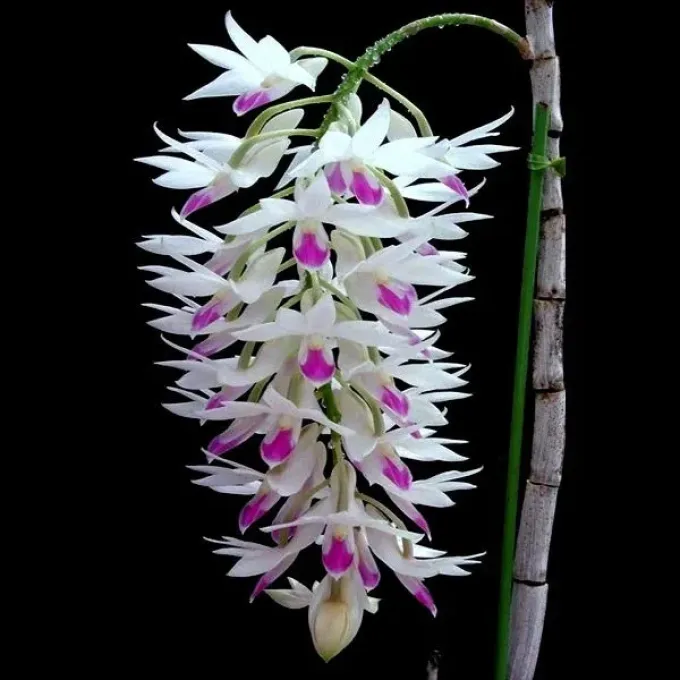
Description
Growing requirements
Dendrobium amethystoglossum belongs to the Orchidaceae family and is native to the high-altitude tropical forests of the Philippines. As an epiphyte, it naturally thrives on tree branches, adapting to high atmospheric humidity and fluctuating mountain temperatures, which are essential for its physiological cycles.
This orchid requires a bright, diffused light environment. In commercial or hobby cultivation, it is vital to avoid direct exposure to midday sun, which can scorch the foliage. Supplemental LED lighting is often employed to maintain consistent growth rates during short-day periods in winter months.
The substrate must prioritize drainage and aeration above all else. A potting mix consisting of high-quality pine bark, perlite, and charcoal is standard. This structure allows the roots to breathe and prevents the stagnant moisture that is fatal to epiphytic root systems in home conditions.
Temperature management is crucial for this species. To initiate healthy growth and subsequent flowering, the plant benefits from a distinct day-to-night temperature differential. A diurnal range of roughly 7-10°C is recommended, ideally maintaining cooler nights to mirror the plant's native highland climate.
Watering should be rhythmic, matching the plant's active growth stage. During the spring and summer, moisture availability should be consistent, while during the rest phase in winter, irrigation frequency should be reduced significantly, allowing the pseudobulbs to stay firm without being overly hydrated.
Main diseases and pests
Common pests affecting this culture include spider mites and mealybugs, which exploit low-humidity environments. Integrated pest management, including systemic insecticides and increased airflow, is the most effective approach to preventing large-scale infestations that could damage the orchid's delicate pseudobulbs.
Fungal pathogens such as Pythium and Phytophthora pose a constant threat if the drainage is inadequate. These infections primarily target the root system, causing rapid decay. Proper sanitation of tools and the use of sterile growing media are mandatory steps to mitigate the risk of these soil-borne diseases.