
Dendrobium anceps
Dendrobium anceps
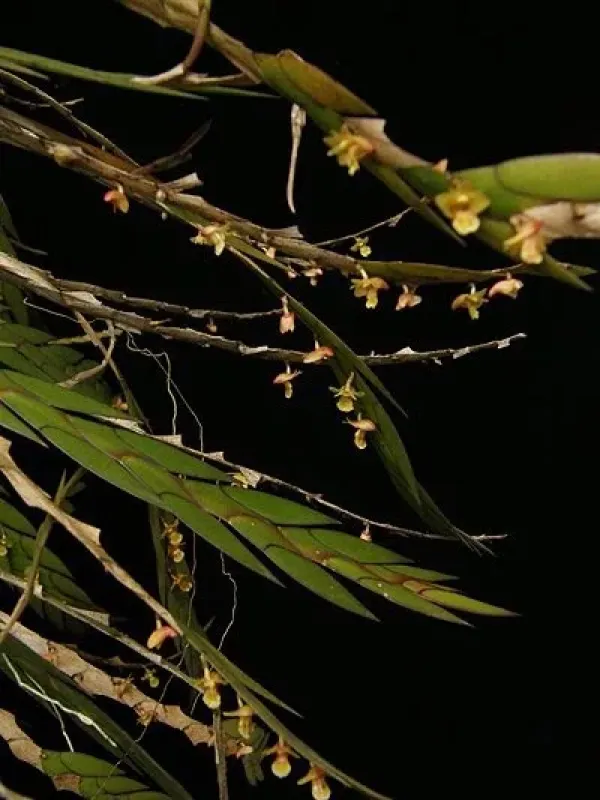
Description
Growing requirements
Dendrobium anceps is an interesting epiphytic species belonging to the Orchidaceae family, native to the tropical regions of Southeast Asia. Its natural habitat consists of humid forests where it grows high in the canopy, often exposed to frequent moisture and filtered light.
To cultivate this plant successfully, it is essential to maintain high relative humidity levels, ideally ranging between 70% and 80%. This humidity must be coupled with excellent air circulation to mimic its natural environment and prevent stagnant air around the foliage.
The plant requires bright, filtered light. While it needs significant light intensity to thrive and produce blooms, intense midday sun should be avoided to prevent thermal damage to its characteristic flattened stems and leaves.
Proper substrate choice is crucial; it must be highly porous to ensure rapid drainage. Most growers use coarse bark, charcoal, or mounting on cork or fern wood slabs to prevent the roots from remaining damp for extended periods, which is vital for preventing rot.
Temperature management should follow a seasonal pattern. During the growing season, a warm environment is preferred, while a slightly cooler period during winter—often with reduced watering—is necessary to encourage the plant to enter a resting phase and stimulate flowering.
Main diseases and pests
The primary threats to Dendrobium anceps are fungal and bacterial infections caused by improper irrigation practices, specifically keeping the roots too wet or allowing water to accumulate in the leaf axils.
Pests such as spider mites, scale insects, and mealybugs are common problems in indoor cultivation, particularly during drier winter months. Regular monitoring is essential to catch infestations before they cause significant structural damage.
Root rot is the most common physiological issue, resulting from media degradation or over-potting in containers that are too large. Using high-quality, airy potting media and ensuring proper drainage holes are the best preventive strategies.
Leaf-spotting fungi can affect the plant if hygiene is poor. Ensuring that tools are disinfected between uses and removing any decaying plant material is fundamental for maintaining a healthy greenhouse or collection.
Finally, improper water quality, such as water with high mineral content, can lead to salt accumulation in the roots, potentially causing nutrient uptake issues and inviting opportunistic pathogens to attack the weakened plant tissue.