
Dendrobium thyrsiflorum
Dendrobium thyrsiflorum
Description
Growing requirements
Dendrobium thyrsiflorum is an exquisite epiphytic orchid species belonging to the Orchidaceae family. Native to the mountainous forests of Southeast Asia, including parts of India, Myanmar, and Vietnam, this species typically thrives in humid, shaded environments at elevations ranging from 500 to 1500 meters.
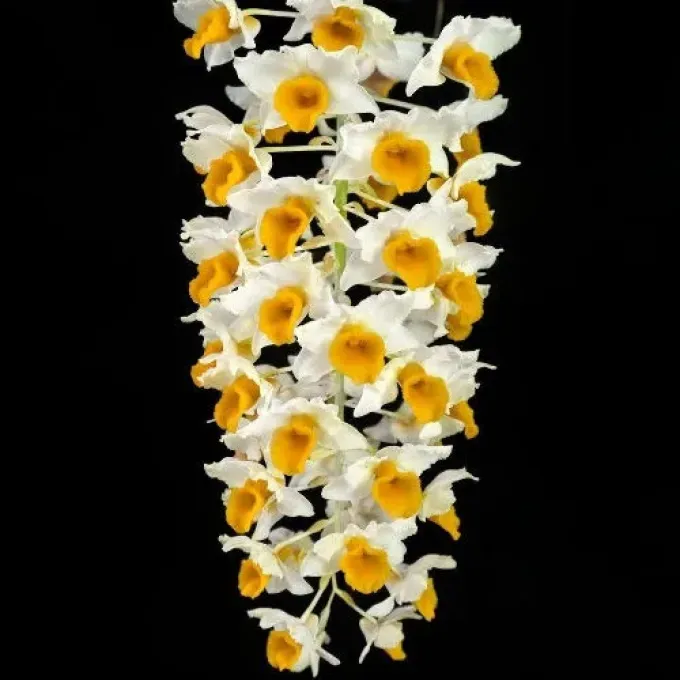
The plant is characterized by its robust, tall pseudobulbs which can reach significant heights, supporting leathery, dark green leaves. The most distinct feature is its pendulous inflorescence, which produces dense, grape-like clusters of fragrant white flowers with vibrant yellow lips, making it a highly valued decorative culture.
To successfully cultivate this species, growers must provide high light levels, similar to those required by other members of the Dendrobium genus, while avoiding direct mid-day sunlight. A consistent air circulation system is vital to prevent leaf stagnation and promote healthy metabolic processes in the plant.
Temperature management is the cornerstone of its agrotechnology. The plant requires a marked difference between daytime and nighttime temperatures, especially during the autumn season, to trigger the development of flower spikes. During the resting phase, temperatures should be kept cooler to ensure a successful cycle.
The potting medium must be exceptionally well-draining, consisting of bark chips, perlite, and charcoal to maintain root health. Watering should be plentiful during the active growth period, while the resting period necessitates a reduction in irrigation to prevent root rot and physiological stress.
Main diseases and pests
Common pests affecting Dendrobium thyrsiflorum include spider mites, mealybugs, and scale insects. These pests often congregate in leaf axils or under the leaves, draining plant vitality. Frequent monitoring and the application of appropriate horticultural soaps or systemic pesticides are recommended for control.
Fungal pathogens such as Botrytis or various types of root rot frequently occur in environments with poor ventilation or stagnant water. Implementing a strict quarantine for new plants and maintaining clean growing surfaces are essential preventive measures to protect the collection from sudden outbreaks.