
Dendrobium smillieae
Dendrobium smillieae
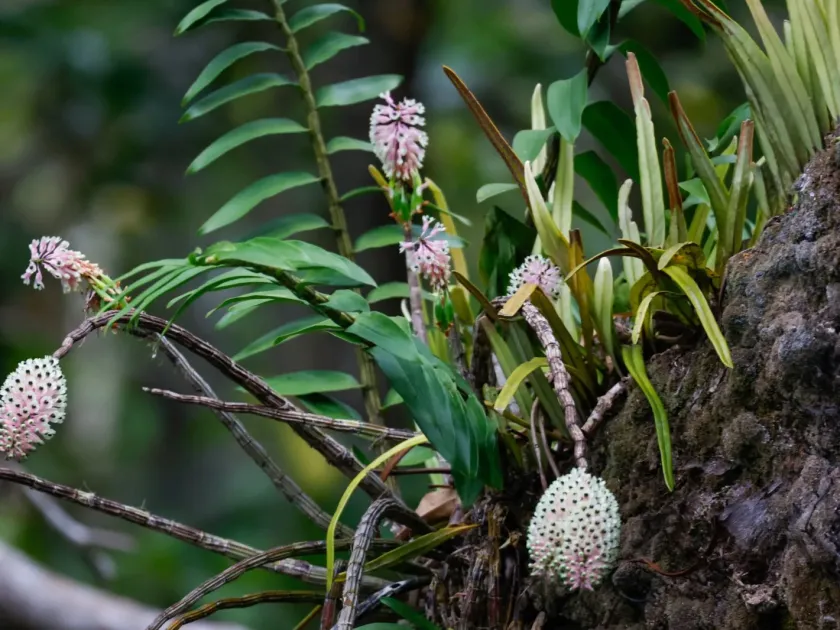
Description
Growing requirements
Dendrobium smillieae is a distinctive perennial plant belonging to the Orchidaceae family. Naturally occurring in the tropical rainforests of Australia and New Guinea, it typically grows as an epiphyte, attaching itself to trees to access filtered sunlight and moisture.
For successful cultivation, this species requires a high relative humidity level, ideally between 60% and 80%. It thrives in warm environments, with daytime temperatures ranging from +22°C to +28°C, providing it mimics the tropical climate of its natural origin.
The choice of potting medium is critical for this species; a coarse mix of pine bark, charcoal, and sphagnum moss is recommended to ensure optimal drainage and aeration. Because epiphytic roots are sensitive, it is essential that the substrate does not become compacted or waterlogged.
Regarding light exposure, Dendrobium smillieae needs bright, filtered sunlight to encourage development and blooming. Avoid direct midday sun, as it can scorch the foliage and lead to dehydration, necessitating the use of light-filtering shades or strategic placement.
Watering should be performed consistently during the growing season, allowing the media to reach a state of partial dryness before re-watering. During the winter rest period, watering frequency should be reduced to prevent root rot and reflect the natural dormancy cycle.
Main diseases and pests
Common pests affecting Dendrobium smillieae include spider mites and scale insects, which often proliferate in environments with poor air circulation or low humidity. Routine monitoring of the underside of leaves is recommended for early detection.
Fungal diseases, such as root rot or stem blight, are frequent consequences of overwatering or inadequate ventilation. Ensuring the pot has sufficient drainage holes and using sterile equipment during maintenance are key preventative measures.
Leaf spotting diseases may occur if moisture is trapped on the foliage for extended periods. It is advisable to water the potting medium directly rather than overhead to keep the leaves dry and healthy.
If an infection is detected, affected areas should be carefully removed with sterilized tools, and the plant should be treated with appropriate fungicide if necessary. Isolation from healthy plants is essential until the condition is fully resolved.
Proactive care, including optimal humidity management and good airflow, is the most effective way to protect the plant. Maintaining a clean growing area significantly reduces the risk of pest and disease outbreaks.