
Dendrobium scopa
Dendrobium scopa
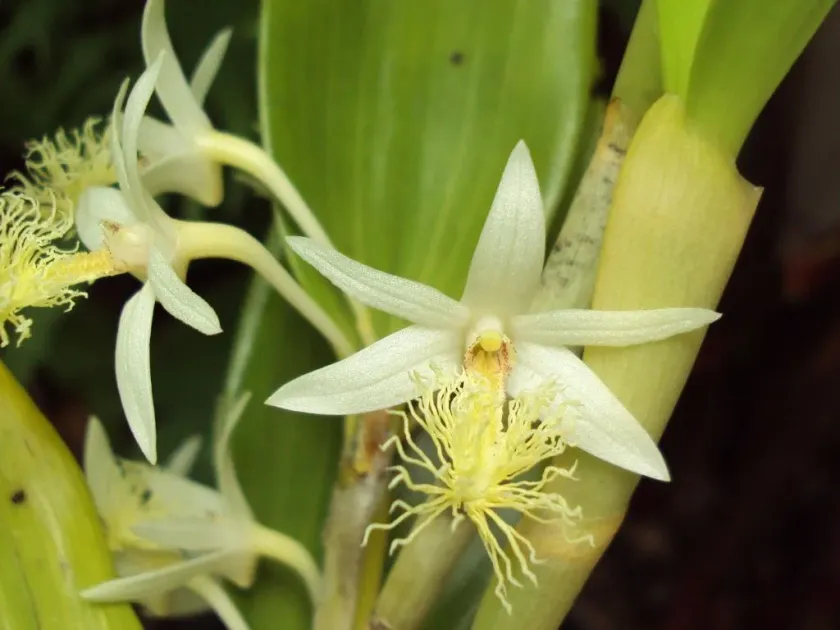
Description
Growing requirements
Dendrobium scopa is a member of the Orchidaceae family, known for its distinct epiphytic growth habit. Originating from the tropical regions of Southeast Asia, this plant has adapted to survive in humid forest canopy environments.
Climate requirements for this species are specific: it thrives in temperatures ranging from 18 to 24 degrees Celsius. It requires a significant diurnal temperature variation to encourage the development of flower buds throughout the growing season.
Proper light exposure is critical for the health of Dendrobium scopa. It prefers bright, filtered sunlight; direct exposure to the sun during the hottest hours can lead to dehydration and tissue damage of the leaves and pseudobulbs.
The growing medium must be highly porous to ensure rapid drainage and air circulation around the roots. A standard orchid mix consisting primarily of pine bark, perlite, and charcoal is recommended to mimic the natural aerated environment.
Watering techniques should be centered on the wet-dry cycle. The potting medium should be allowed to dry out slightly between waterings to prevent root asphyxiation, while maintaining sufficient environmental humidity around the foliage.
Main diseases and pests
Scale insects are a primary concern for this orchid, as they cling to stems and leaves, feeding on plant sap. Early detection is essential, involving the regular inspection of the undersides of leaves and the junction points of pseudobulbs.
Root rot caused by stagnant water is the most frequent fatal condition in cultivation. If the potting medium decomposes or becomes too compact, it prevents proper aeration, leading to the rapid decay of the root system.
Fungal leaf spot diseases may appear if the ambient humidity is too high without adequate air movement. Improving ventilation through the use of small fans is an effective preventative measure to keep the foliage dry.
Aphids can infest new growth and flower spikes, causing deformation and stunted development. The application of horticultural soaps or specific systemic insecticides can manage these populations effectively without harming the plant.
Botrytis, a fungal pathogen, often manifests as small brown spots on flowers during periods of cool, damp conditions. Reducing humidity and increasing air circulation are the primary methods for managing this threat in a greenhouse or home environment.