
Dendrobium salaccense
Dendrobium salaccense
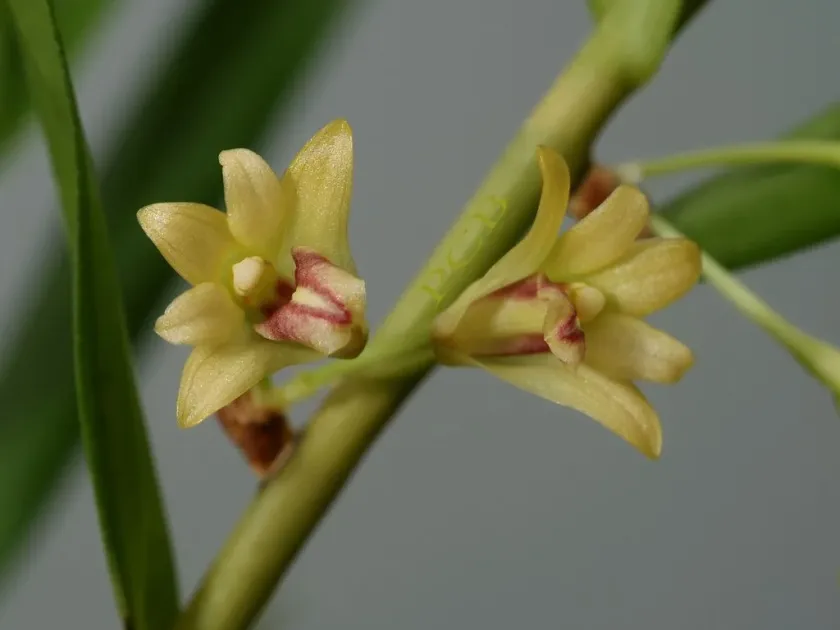
Description
Growing requirements
Dendrobium salaccense is a distinct species of epiphytic orchid belonging to the Orchidaceae family, native to the humid tropical forests of Southeast Asia, primarily found in regions like Indonesia and Malaysia.
As an epiphyte, this plant naturally grows on tree branches, where it thrives on high atmospheric humidity and nutrient runoff, necessitating very specific environmental conditions when grown in a controlled agricultural or horticultural setting.
Cultivation requires a medium that mimics its natural habitat, typically consisting of well-draining bark, charcoal, and sphagnum moss to ensure that air can circulate freely around the sensitive root system of the plant.
The plant thrives in moderate to bright indirect light, as direct tropical sunlight can cause severe leaf scorch and damage the plant's photosynthetic capability, leading to weakened growth and reduced flowering.
Temperature management is crucial; the plant performs best in a stable environment with daytime temperatures between 20°C and 25°C, ensuring that the nocturnal temperature drops sufficiently to mimic the natural diurnal cycle.
Main diseases and pests
The primary threats to Dendrobium salaccense involve fungal pathogens which typically emerge during periods of stagnant air, poor ventilation, or excessive irrigation that keeps the roots saturated for too long.
Common pests include spider mites and scale insects, which can rapidly infest the plant's foliage, causing yellowing and stunted growth if not addressed with timely insecticidal treatments or manual removal.
Root rot is perhaps the most dangerous condition for this species, usually resulting from the accumulation of mineral salts in the potting medium, which weakens the orchid's natural immune system.
To maintain plant health, it is essential to use pure or filtered water for irrigation, avoiding tap water that is high in chlorine or mineral content, which can prove toxic to epiphytic plants over time.
Regular inspections of the undersides of leaves and the stem base are recommended to detect early signs of infestation, ensuring that local outbreaks do not spread to other specimens in the collection.