
Dendrobium purpureum
Dendrobium purpureum
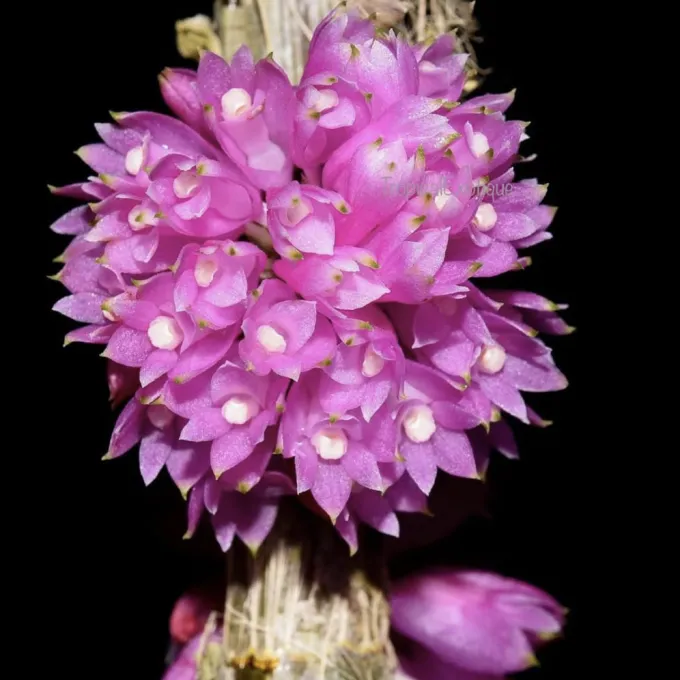
Description
Growing requirements
Dendrobium purpureum is a species of orchid belonging to the Orchidaceae family. It is primarily an epiphytic plant that thrives in the tropical rainforests of the Pacific region, where it grows attached to the bark of forest trees.
The plant structure consists of cylindrical pseudobulbs that store water, which is a vital adaptation for surviving intermittent dry periods. The lanceolate leaves are evergreen and leathery, providing structural integrity in the high-humidity environment of its natural range.
Environmental conditions require strict adherence to temperature ranges, ideally between 20 and 26 degrees Celsius. High humidity levels are essential for this species, requiring a consistent environment of 65 percent or higher to maintain healthy tissue development.
The potting medium must be porous and provide excellent drainage. Bark-based substrates mixed with perlite or charcoal are considered the industry standard for ensuring that oxygen can reach the root system, preventing asphyxiation.
Light requirements are high, but direct sunlight must be avoided to prevent foliar scorching. In indoor settings, these orchids perform best in southern or eastern exposures protected by thin curtains or semi-transparent shading.
Main diseases and pests
Spider mites are a common threat, especially in indoor environments where the air may become overly dry. These pests thrive in warm, stagnant air and can quickly destroy the plant's photosynthetic capacity if left untreated.
Root rot, primarily caused by Pythium or Phytophthora fungi, remains the leading cause of plant mortality in orchid collections. It is often triggered by poor substrate drainage and cold, waterlogged conditions during the dormant period.
Scale insects often hide in the crevices of pseudobulbs, making them difficult to detect until the infestation becomes severe. Manual cleaning combined with horticultural oil applications is an effective method for localized control.
Viral infections can manifest as mottled patterns on the leaves and stunted growth. Because these viruses are systemic and incurable, sanitation protocols, such as disinfecting tools between plants, are critical for disease prevention.
Over-fertilization can result in salt buildup in the potting medium, causing chemical burns on root tips. It is recommended to flush the substrate with pure water monthly to remove excess mineral residues.