
Dendrobium parishii
Dendrobium parishii
Description
Growing requirements
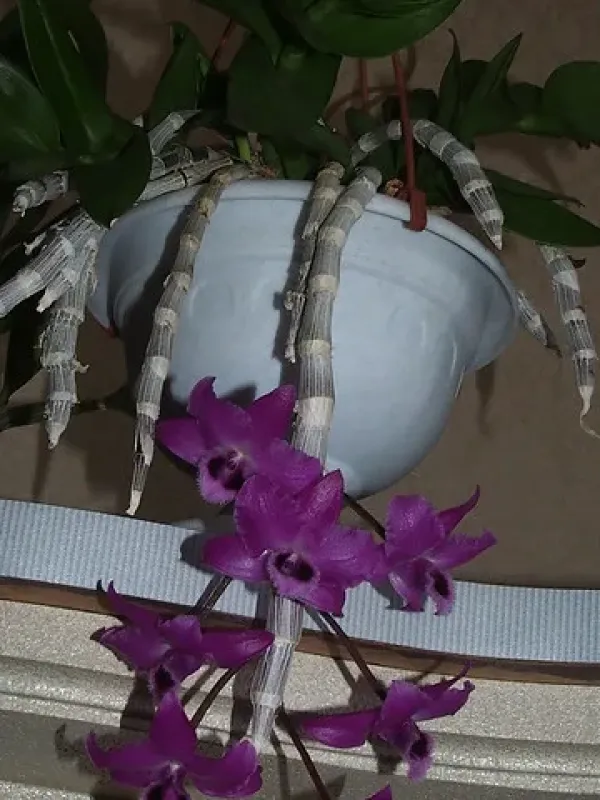
Dendrobium parishii is a distinct epiphytic orchid species belonging to the Orchidaceae family. Originating from the tropical forests of Southeast Asia, including parts of India, Myanmar, and Thailand, this orchid typically grows on tree trunks and branches at high altitudes.
The plant is characterized by its pendulous pseudobulbs that can reach up to 50 cm in length. Its leaves are deciduous, falling off during the rest period, which is a vital biological adaptation preparing the orchid for its vibrant flowering cycle.
For successful growth, this species requires bright, filtered light. While it loves sunshine, intense direct light can easily scorch its leaves; therefore, eastern or western windows with partial shading during the summer months are considered ideal.
A well-draining substrate is critical to avoid root rot. A mix consisting of pine bark, charcoal, and a small amount of sphagnum moss is recommended to ensure adequate aeration and moisture retention that mimics its natural tree-dwelling habit.
Temperature management is key: the species thrives in warm conditions (20–25°C) during the growth phase, while a significant drop in night temperatures during winter is essential to initiate the development of flower buds.
Main diseases and pests
Spider mites and scale insects are the primary pests affecting Dendrobium parishii. These pests thrive in dry environments and can quickly sap the plant's vigor, necessitating regular inspections and timely intervention with horticultural oils or insecticides.
Root rot is the most common threat caused by improper watering, especially during the dormant season. It is essential to allow the growing medium to dry out almost completely between waterings to ensure roots stay healthy and oxygenated.
Poor ventilation can lead to fungal issues, such as powdery mildew or leaf spots. Improving air circulation around the plants helps prevent these pathogens and maintains overall plant hygiene in indoor growing conditions.
Bacterial infections can occur if water remains trapped in the axils of the leaves for too long. Always water during the morning hours so that any excess moisture can evaporate before the cooler nighttime temperatures occur.
Over-fertilization during the rest period can disrupt the plant's natural cycle. It is recommended to reduce or stop fertilization completely in late autumn and winter to allow the plant to complete its biological cycle effectively.