
Dendrobium ovatum
Dendrobium ovatum
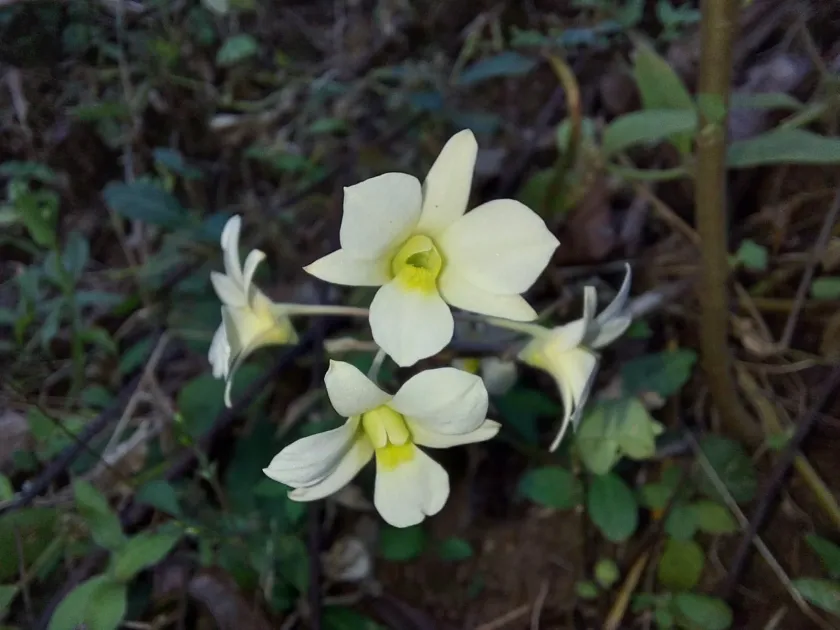
Description
Growing requirements
Dendrobium ovatum is a member of the diverse Orchidaceae family. It is a perennial epiphytic plant that naturally occurs in the tropical forests of Southern India and Sri Lanka.
The culture has strict temperature requirements. To ensure active growth and consistent flowering, it is necessary to maintain moderately warm conditions, avoiding the extreme diurnal temperature fluctuations often seen in high-altitude species.
A crucial factor for success is high relative humidity, which should be maintained at 60–75%. Commercial cultivation often employs misting systems or the use of trays filled with moist expanded clay to manage atmospheric moisture.
The plant requires intense but filtered light. Direct sunlight can cause significant damage to the leaf tissues, so protective shading systems are standard in greenhouse operations.
The potting medium must provide excellent aeration and drainage. Growers typically use specialized substrates composed of pine bark, charcoal, and sphagnum moss to prevent root rot and ensure proper nutrient uptake.
Main diseases and pests
The primary threats to this crop are fungal infections, which develop under poor ventilation and excessive moisture levels. Stem and root rots are the most common issues observed in humid environments.
Pest pressure mainly comes from spider mites and scale insects, which proliferate rapidly if the humidity levels drop too low. Periodic preventative spraying with insecticides and acaricides is a necessary part of the management protocol.