
Dendrobium ochreatum
Dendrobium ochreatum
Description
Growing requirements
Dendrobium ochreatum is an epiphytic orchid species belonging to the Orchidaceae family. It is native to the mountain forests of the Himalayas, India, and parts of China, where it grows primarily on tree trunks under canopy conditions with high humidity levels.
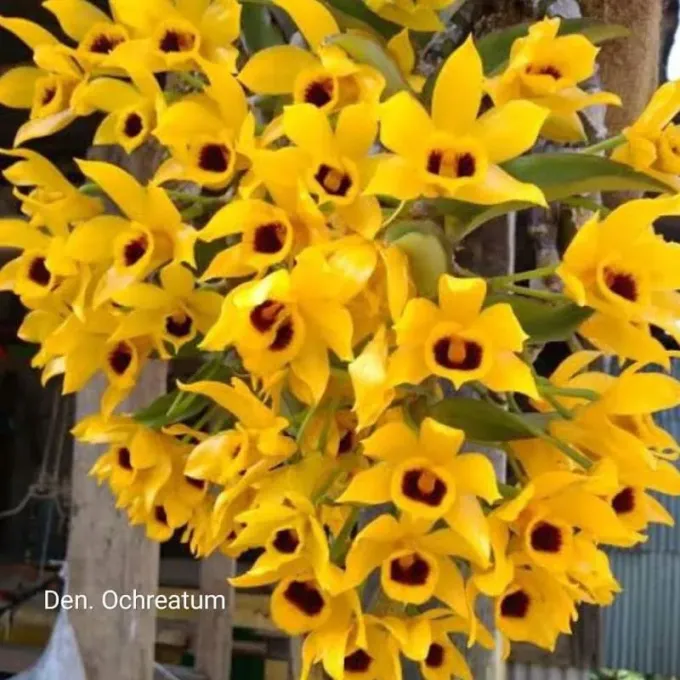
Botanically, this orchid is characterized by its distinct, pendulous pseudobulbs that can grow to significant lengths. The foliage is deciduous, and the plant produces showy, bright yellow to orange flowers with a deep maroon blotch, which serve as its primary ornamental feature.
Cultivation of this species requires a specialized approach, prioritizing excellent drainage. It thrives best when mounted on cork slabs or cultivated in baskets with coarse, well-draining orchid bark, which mimics its natural epiphytic growing environment.
The light requirements are substantial; the plant needs bright, filtered light to maintain healthy pseudobulb development. Lack of sufficient light intensity is a common error that prevents the plant from reaching its full flowering potential during the spring season.
Temperature management is critical for the lifecycle. During the growing season, a warm to intermediate temperature range is ideal. However, a significant drop in night temperatures is required in late autumn to trigger the physiological process of flower bud initiation.
Main diseases and pests
Dendrobium ochreatum is susceptible to common greenhouse pests such as scale insects and spider mites. These pests typically congregate on the undersides of the leaves and on the pseudobulbs, draining sap and causing visible tissue degradation.
Root and stem rot caused by pathogenic fungi (like Phytophthora) are the most dangerous threats in cultivation. These conditions are almost exclusively triggered by improper watering schedules or poor air circulation, necessitating strict control over substrate moisture levels.