
Dendrobium moniliforme
Dendrobium moniliforme
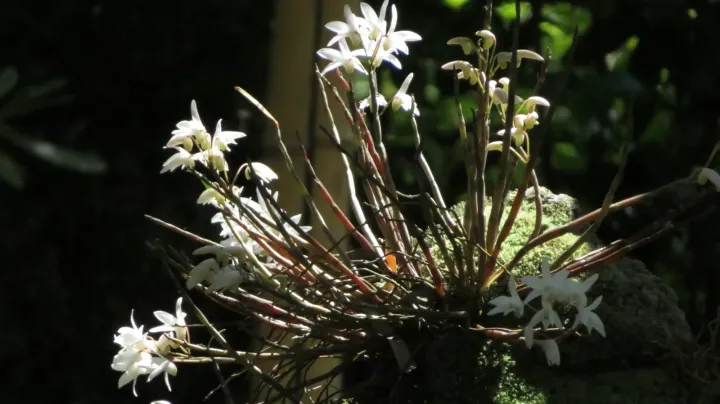
Description
Growing requirements
Dendrobium moniliforme is a perennial epiphytic herb belonging to the Orchidaceae family, renowned for its resilience and unique physiological adaptations.
Originating from East Asia, including Japan, Korea, and China, this species typically grows on cliffs or tree trunks, favoring environments with high atmospheric humidity and good airflow.
In a controlled cultivation setting, providing a growing medium that ensures rapid drainage is crucial to the health of the plant's delicate root system.
Optimal growth requires a significant difference between daytime and nighttime temperatures, which triggers the plant's natural flowering cycle and metabolic processes.
Light management is equally important, as this orchid thrives under bright, filtered sunlight, which ensures the proper maturation of its characteristic pseudobulbs.
Main diseases and pests
The primary threats to Dendrobium moniliforme include fungal and bacterial infections, which are often exacerbated by stagnant air and excessive moisture levels.
Root rot is the most critical condition, necessitating immediate intervention through the removal of damaged sections and the application of appropriate antifungal treatments.
Pest pressure from spider mites and scale insects poses a constant challenge, as these pests can rapidly compromise the integrity of the plant's foliage.
Integrated pest management strategies, focusing on early detection and the use of targeted biological or chemical control agents, are essential for maintaining crop health.
Ensuring adequate ventilation and maintaining strict hygiene during propagation are the most effective preventative measures against the spread of pathogens.
Harvesting
The agricultural harvesting of this crop primarily targets the pseudobulbs, which contain active ingredients utilized in traditional pharmacology for their restorative properties.
Harvesting is traditionally conducted when the plant is in its dormant phase, ensuring the highest accumulation of phytochemicals within the stem structures.
Once harvested, the material undergoes a controlled drying process to stabilize its chemical composition and prevent degradation during storage and transport.
Beyond its pharmacological use, the species is highly valued in the horticultural trade, where healthy, well-developed plants are sold as ornamental specimens.
Successful management of the harvest cycle allows for the sustainable production of both plant-based medicines and high-quality nursery stock.