
Thumbnail Orchid
Dendrobium linguiforme
Description
Growing requirements
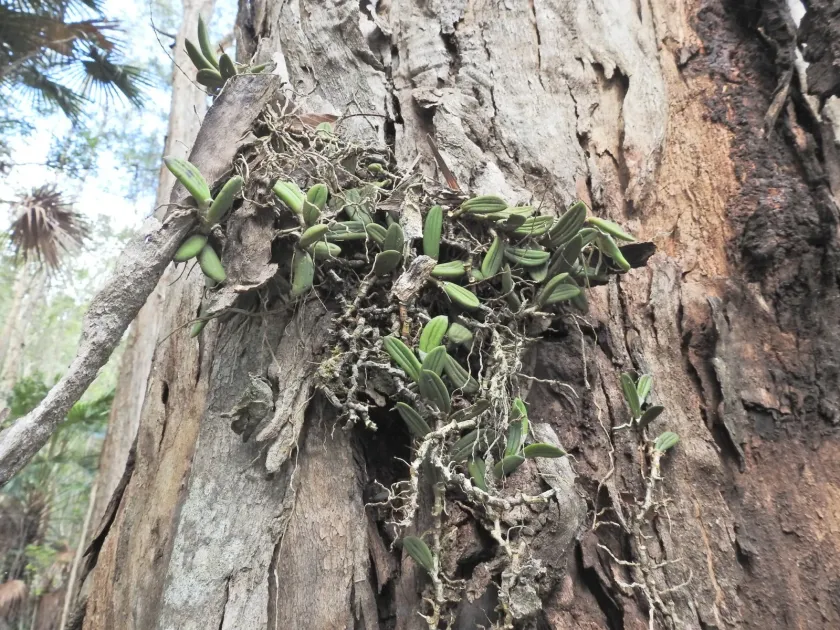
The Thumbnail Orchid, scientifically known as Dendrobium linguiforme, is a unique epiphyte or lithophyte belonging to the Orchidaceae family. It is native to the eastern parts of Australia, where it naturally colonizes tree trunks and rocky surfaces.
The plant is easily recognized by its distinctive leaves, which are fleshy, wrinkled, and shaped like a tongue, hence the common name. These leaves are a specialized adaptation for storing water, allowing the plant to thrive in environments with irregular rainfall.
Cultivation requires a specialized mounting medium, such as a piece of cork bark or hardwood, to mimic its natural epiphytic habitat. The roots need excellent air circulation, which is why potting it in a dense soil mix is strongly discouraged.
Temperature management is critical, with the orchid preferring a range between 15°C and 25°C. Providing a cooling period at night is essential to trigger the plant's natural flowering cycle and ensure healthy growth throughout the year.
Regular misting or light watering is preferred over deep soaking, particularly in high-humidity conditions. During the winter dormancy phase, watering should be significantly reduced to allow the plant to rest, ensuring it survives until the next growing season.
Main diseases and pests
Common pests affecting this species include mealybugs and spider mites, which can easily hide in the wrinkled crevices of the leaves. These pests feed on the plant sap, often causing stunting and discoloration if left unchecked for an extended period.
Fungal pathogens often develop when air circulation is poor or when the plant remains damp for too long. Root rot is a common issue for hobbyists who mistakenly treat this orchid like a terrestrial plant, leading to the rapid decay of its root system.
Integrated pest management is the most effective approach for Dendrobium linguiforme. This involves physical inspection, manual removal of insects, and the judicious use of horticultural oils if the infestation persists beyond initial control efforts.
Maintaining a clean growing environment is vital for preventing the spread of diseases. Any decaying plant matter or old moss that has begun to degrade should be removed to discourage the growth of opportunistic bacteria and mold spores.
If an infection is detected, isolate the orchid immediately and trim away any blackened or mushy tissue with sterilized tools. Following surgery, keep the plant in a drier area with increased airflow to promote healing and recovery of the affected parts.