
Dendrobium lindleyi
Dendrobium lindleyi
Description
Growing requirements
Dendrobium lindleyi is a distinct epiphytic orchid species within the Orchidaceae family. Native to the mountain forests of Southeast Asia, including regions of China, Thailand, and Myanmar, it thrives in high-altitude environments anchored to tree trunks.
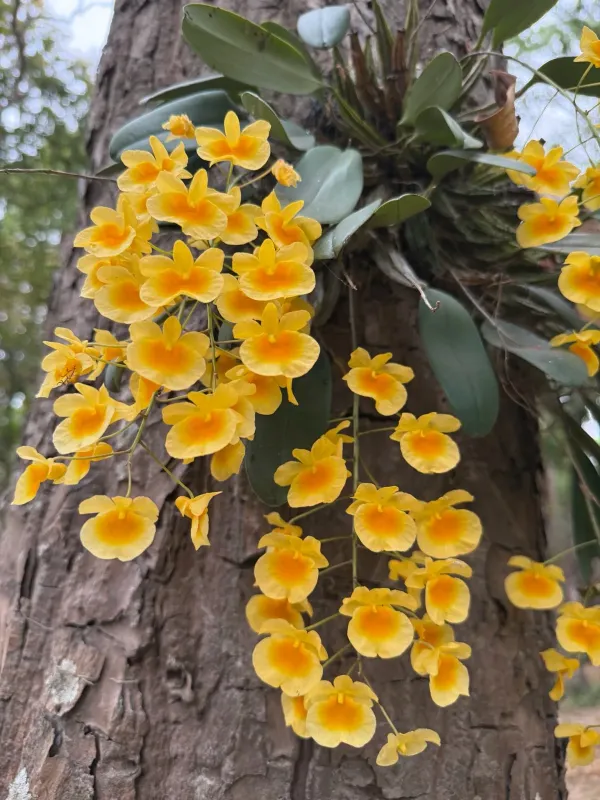
Botanically, it is recognized by its small, clustered pseudobulbs that typically produce a single, thick, leathery leaf. The inflorescence is a cascading raceme displaying numerous vibrant, fragrant yellow flowers with a deep orange, wax-like throat.
Cultivation requires a strict adherence to a seasonal cycle. Providing a dry, cooler rest period during the winter months is essential to trigger the development of flower spikes in the spring. Without this cooling, the plant may remain in a vegetative state.
Given its epiphytic nature, the root system requires rapid drainage and consistent airflow. Growers prefer mounting the plant on bark slabs or using wooden baskets filled with coarse-grade bark, which prevents moisture from accumulating around the root mass.
Environmental conditions must mimic its tropical origin by providing bright, indirect light and a humid atmosphere. Proper ventilation is as important as light intensity; stale air frequently leads to weak growth and susceptibility to physiological disorders.
Main diseases and pests
The primary pests affecting this species are spider mites and scale insects, which often appear when the ambient humidity drops below optimal levels. Frequent inspection of the pseudobulbs and leaf undersides is recommended for early detection.
Fungal infections, particularly crown rot and root rot, represent the most significant threat to the health of the plant. These issues are almost exclusively caused by excessive moisture levels combined with poor air circulation, necessitating a sterile and well-draining growing medium.