
Dendrobium leporinum
Dendrobium leporinum
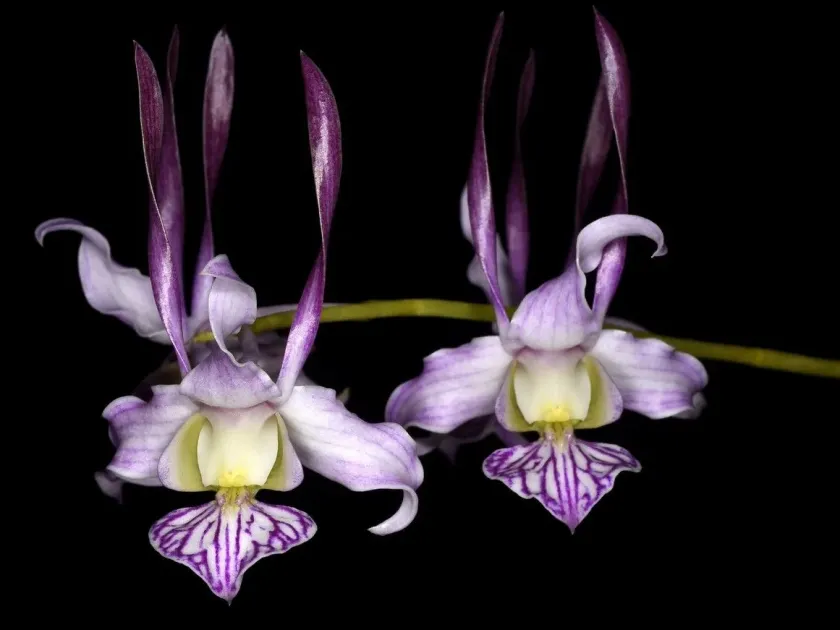
Description
Growing requirements
Dendrobium leporinum is a fascinating species within the Orchidaceae family, native to the tropical forests of Indonesia and New Guinea. This orchid is highly valued by collectors for its unique floral structure and epiphytic growth habit.
Botanically, the plant features long, slender pseudobulbs that support narrow, tough leaves. Its appearance is adapted to surviving in high-humidity environments where it clings to tree branches, capturing moisture from the air and rain.
Successful cultivation of this species requires a stable temperature regime that mimics its natural high-altitude environment. It thrives best in intermediate to cool conditions, with significant temperature drops during the night.
The potting medium must be extremely well-draining, typically consisting of premium bark, charcoal, and perlite. Proper air circulation around the root system is essential to prevent common moisture-related issues.
Lighting should be bright but filtered, avoiding direct exposure to intense noon sun, which can dehydrate the pseudobulbs. During the growing season, consistent moisture and high humidity levels are crucial for healthy development.
Main diseases and pests
The primary pests affecting Dendrobium leporinum are mealybugs and spider mites, both of which thrive in indoor orchid collections. Regular monitoring of leaf undersides is recommended to detect early infestations.
Bacterial and fungal rots are the most serious threats, often caused by inadequate ventilation or water accumulating in the crown of the plant. Maintaining hygiene during pruning and repotting is vital.
For controlling pests, gentle insecticidal soaps or neem oil solutions are often effective if applied early. It is important to treat the plant in a well-ventilated area to ensure safety and effectiveness.
Root rot can be identified by the blackening of the roots and soft, mushy pseudobulbs. In such cases, surgical removal of affected tissue and repotting into fresh media is the only way to save the plant.
To ensure long-term health, growers should avoid over-fertilizing, as excessive salts can build up in the substrate and burn the sensitive root tips, making the plant more susceptible to opportunistic pathogens.