
Dendrobium leonis
Dendrobium leonis
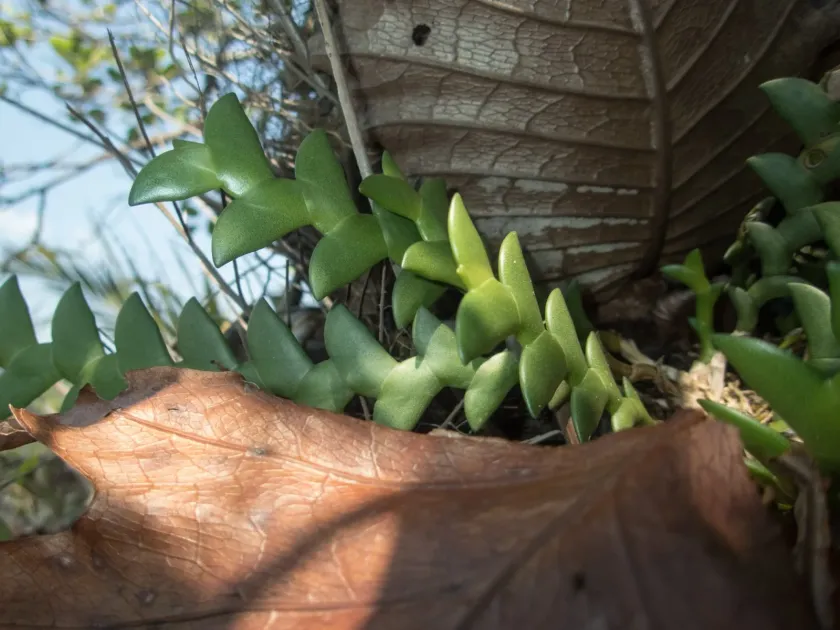
Description
Growing requirements
Dendrobium leonis is a unique epiphytic orchid species belonging to the Orchidaceae family. Native to the tropical forests of Southeast Asia, including Thailand and Malaysia, this plant thrives in warm, humid forest environments.
Botanically, this orchid is distinct for its succulent, triangular leaves that grow in a compressed, fan-like arrangement, closely resembling a lion's tail. The plant has a sympodial growth habit, producing multiple stems over time.
Cultivation requires high humidity levels, ideally maintained between 70% and 80%. Proper air circulation is mandatory to mimic the natural breezy forest canopy conditions and to prevent moisture-related issues.
Optimal potting media involves mounting the plant on cork bark or using a coarse, well-draining mixture of pine bark, charcoal, and perlite. The roots must have constant access to oxygen, meaning the medium should never be overly compacted or waterlogged.
Lighting should be bright but filtered. Providing approximately 20,000 to 30,000 lux is sufficient for healthy growth. If the foliage turns reddish, it indicates that the plant is receiving too much light, and shading should be adjusted accordingly.
Main diseases and pests
Spider mites and mealybugs are the most common pests affecting this species. They often find shelter between the dense, overlapping leaves, making physical removal and localized treatment challenging.
Root rot and stem rot are the primary pathological threats, typically triggered by improper watering practices or low-quality drainage. When the roots remain wet for too long, the plant quickly succumbs to fungal decay.
Effective pest management involves using systemic insecticides or neem oil sprays applied with precision. It is crucial to monitor the underside of the leaves and the base of the stems where pests prefer to congregate.
To prevent fungal infections, ensure that the plant dries out slightly between watering sessions and that the ambient air is kept moving. Avoid overhead watering to ensure that no moisture sits in the leaf axils for extended periods.
Maintaining a clean growing environment and utilizing balanced, diluted orchid fertilizer during the active growing season strengthens the plant's natural resistance against diseases and environmental stressors.