
Dendrobium infundibulum
Dendrobium infundibulum
Description
Growing requirements
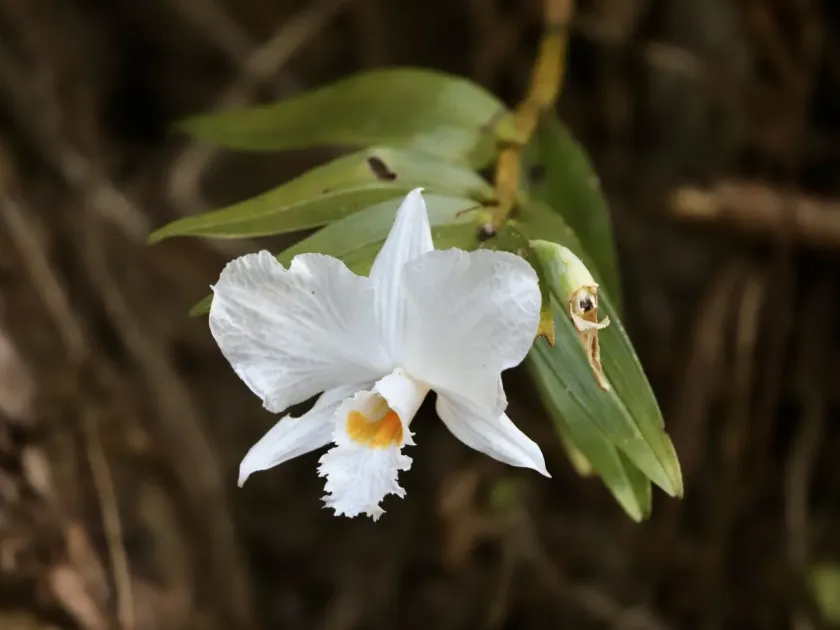
Dendrobium infundibulum is an epiphytic orchid belonging to the Orchidaceae family. It is highly regarded by collectors for its large, waxy white flowers and its distinct funnel-shaped floral structure, which gave it its scientific name.
Originating from the mountainous regions of Southeast Asia, including India, Myanmar, and Thailand, this orchid thrives in cool, humid environments at elevations between 1000 and 2000 meters. These climatic origins are crucial for its successful cultivation.
The culture requires a cool to intermediate temperature range. Ideally, it should experience a distinct day-night temperature fluctuation, which is a key trigger for flower bud initiation during the development phase.
Cultivation should prioritize high-quality aeration. The orchid is typically potted in a loose, coarse substrate consisting of pine bark and perlite, which ensures the root system dries out quickly and receives sufficient oxygen.
Light levels should be bright but filtered to prevent leaf damage. During the growing season, consistent moisture is necessary, but the frequency of watering must be reduced significantly during the winter rest period.
Main diseases and pests
The most common health issues for Dendrobium infundibulum arise from poor cultural practices, particularly waterlogging of the roots. This creates ideal conditions for root rot and various fungal pathogens that can destroy the plant rapidly.
Insect pests such as spider mites and mealybugs frequently target this species, especially if the air humidity drops below acceptable levels. Regular monitoring of leaf undersides is recommended to catch infestations early.
Effective pest management involves the use of specialized insecticides or horticultural oils. It is essential to avoid heavy chemical sprays if the plant is showing signs of stress, as these can be phytotoxic to sensitive orchid tissues.
Viral infections are a significant threat in specialized collections. Since these diseases are incurable, prevention through the use of sterilized cutting tools and controlling sap-sucking insects is the only viable strategy for plant health.
Maintaining a clean growing environment is essential. Removing fallen leaves and ensuring that no stagnant water remains in the leaf axils will significantly reduce the risk of secondary infections and ensure vigorous plant development.