
Dendrobium hercoglossum
Dendrobium hercoglossum
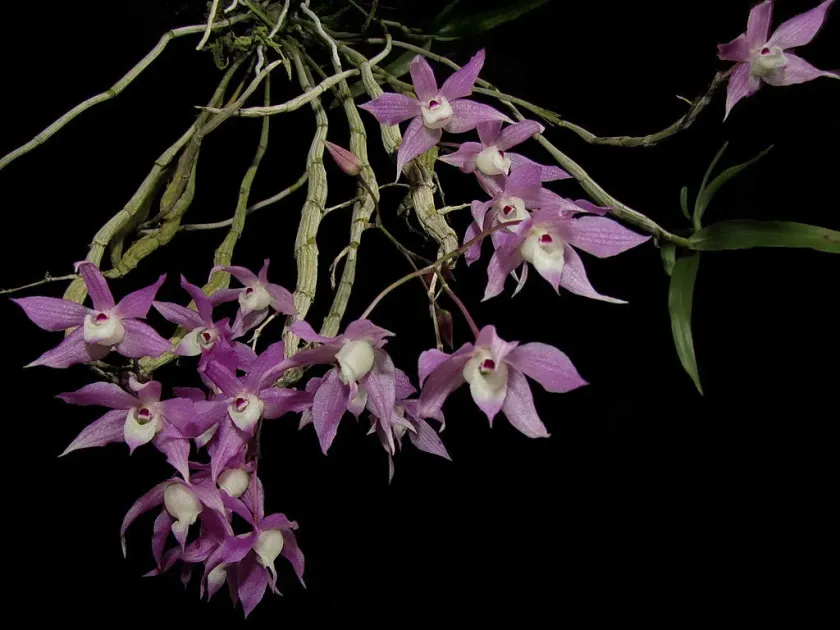
Description
Growing requirements
Dendrobium hercoglossum is an epiphytic orchid species belonging to the Orchidaceae family, native to the tropical and subtropical regions of Southeast Asia. This species is highly valued by collectors for its long, pendulous inflorescences bearing numerous delicate, fragrant flowers.
The plant thrives in intermediate to warm temperatures, typically ranging from 22°C to 28°C during the day and cooling down to 15°C at night. A significant diurnal temperature fluctuation is essential to trigger successful flowering cycles throughout the season.
Light levels should be high but diffused; too much direct sunlight will scorch the leaves and weaken the plant structure. In professional cultivation, shading nets are used to provide the ideal light intensity during peak growing months.
The root system requires an extremely airy and fast-draining substrate, such as a coarse mix of fir bark, charcoal, and perlite. The plants perform best when mounted on cork slabs or grown in baskets that allow for quick evaporation of moisture.
Watering frequency depends on the season; in summer, the plant needs constant moisture, whereas in winter, it requires a dry resting period to mature the pseudobulbs properly. Maintaining humidity levels between 60% and 80% is critical for vigorous growth.
Main diseases and pests
The most common disease affecting Dendrobium hercoglossum is bacterial soft rot, often triggered by water collecting in the leaf axils or stagnant, humid air. Immediate removal of affected tissue and improved ventilation are the standard responses.
Pests like spider mites are prevalent in dry greenhouse conditions. They feed on the underside of the leaves, resulting in a stippled appearance. Regular misting and the use of appropriate acaricides help keep populations under control.
Scale insects can be difficult to manage due to their protective coverings. Manual removal using cotton swabs dipped in rubbing alcohol is effective for minor infestations on stems and leaves.
Fungal leaf spots are frequently caused by poor hygiene and improper watering techniques. Ensuring that water is kept away from the foliage during evening hours significantly reduces the risk of fungal outbreaks.
Nutrient deficiency, particularly lack of magnesium or calcium, can result in yellowing of older leaves. Providing a balanced, dilute fertilizer during the active growing season is necessary to maintain long-term plant health.