
Dendrobium harveyanum
Dendrobium harveyanum
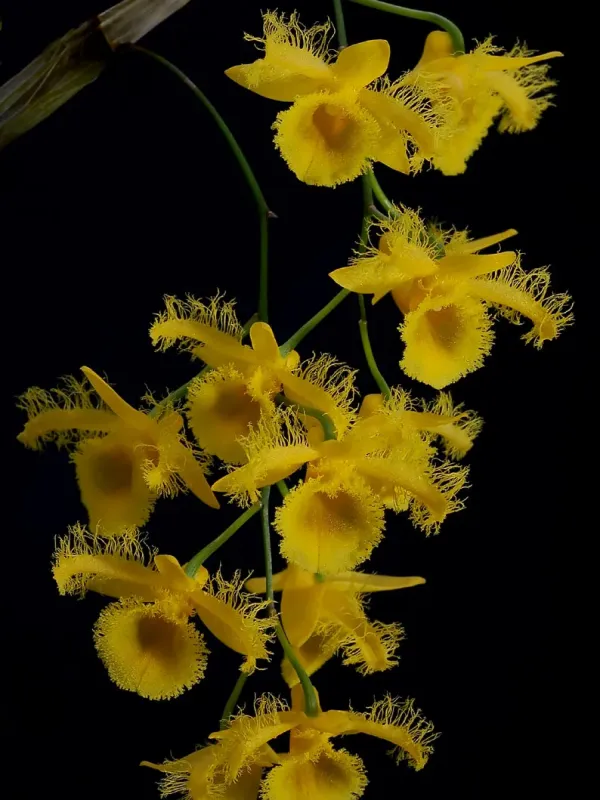
Description
Growing requirements
Dendrobium harveyanum is a distinct member of the Orchidaceae family, originating from the mountainous forests of Myanmar and Thailand. This epiphytic species is highly prized by collectors for its spectacular, heavily fringed yellow flowers.
Morphologically, the plant features slender, spindle-shaped pseudobulbs that typically reach heights of 10–20 centimeters. The foliage is evergreen under favorable conditions, but the plant may shed some leaves during its natural dormant cycle.
The cultivation of this species requires a climate that mimics its native habitat, characterized by distinct wet and dry seasons. It thrives best in intermediate temperature ranges, with a noticeable temperature drop at night to initiate the blooming process.
When selecting a growing medium, it is crucial to prioritize aeration. Coarse pine bark, perlite, and occasional charcoal pieces create an environment that prevents the roots from remaining waterlogged for extended periods.
Light intensity is the primary driver of successful flowering. Providing filtered sunlight, equivalent to 20,000–30,000 lux, ensures that the plant develops the energy reserves necessary to support its unique, intricately shaped floral display.
Main diseases and pests
The primary pests targeting this orchid include spider mites and scale insects. These pests often congregate on the underside of leaves or within the sheaths of pseudobulbs, requiring systemic treatment to ensure complete eradication.
Bacterial and fungal infections are the most common physiological threats, usually triggered by stagnant water and poor air movement. Proper sanitation and the use of sterile cutting tools are vital for preventing the spread of diseases during maintenance.