
Dendrobium fimbriatum
Dendrobium fimbriatum
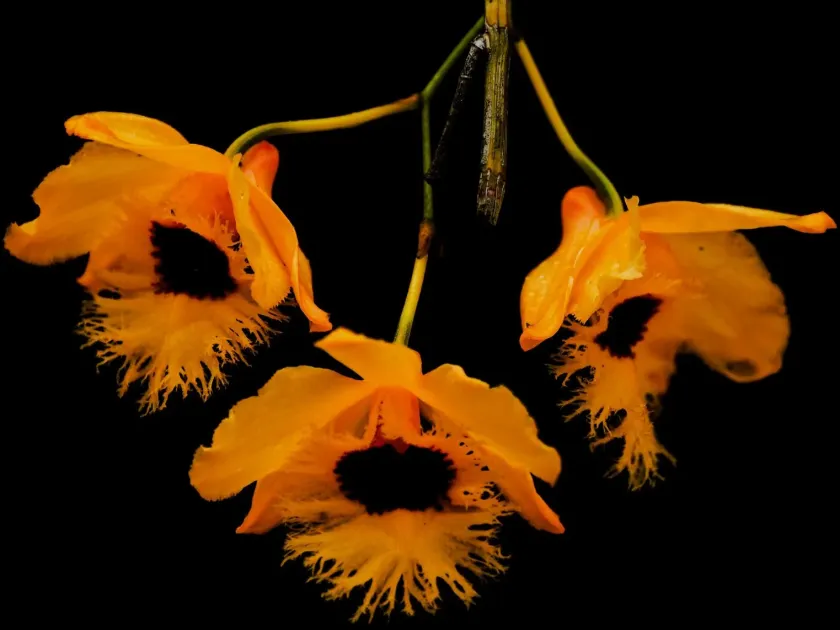
Description
Growing requirements
Dendrobium fimbriatum is a recognized botanical species within the Orchidaceae family, native to the tropical and subtropical regions of Southeast Asia, specifically found in India, China, and Myanmar.
As an epiphytic species, it requires specialized cultivation conditions that mimic its natural habitat. It thrives in high ambient humidity levels and requires a well-ventilated environment to prevent stagnant air conditions.
The optimal substrate for this crop consists of coarse orchid bark or mounted cork, which allows for rapid drainage after irrigation, ensuring that the root system remains aerated.
Temperature management is vital: the plant requires a distinct fluctuation between warm days and cooler nights to initiate the development of its iconic fringed yellow flowers.
Lighting requirements are significant; it prefers bright, filtered sunlight. Exposure to direct midday sun must be mitigated to prevent damage to the foliage and pseudobulbs.
Main diseases and pests
Common horticultural challenges for this species include infestations of spider mites, which can proliferate rapidly in low-humidity environments, causing leaf yellowing and shedding.
Scale insects are also frequent pests, often congregating along the pseudobulbs, where they extract nutrients and weaken the overall structure of the plant.
Fungal diseases, specifically black rot and root rot, are typically triggered by overwatering or the use of decomposed media that retains too much moisture for prolonged periods.
To mitigate these threats, integrated pest management (IPM) practices should be employed, utilizing targeted biological or chemical control agents as soon as pests are detected.
Regular sanitation of the greenhouse environment, including the disinfection of pots and pruning tools, is essential to minimize the spread of pathogens between individual plants.