
Dendrobium farmeri
Dendrobium farmeri
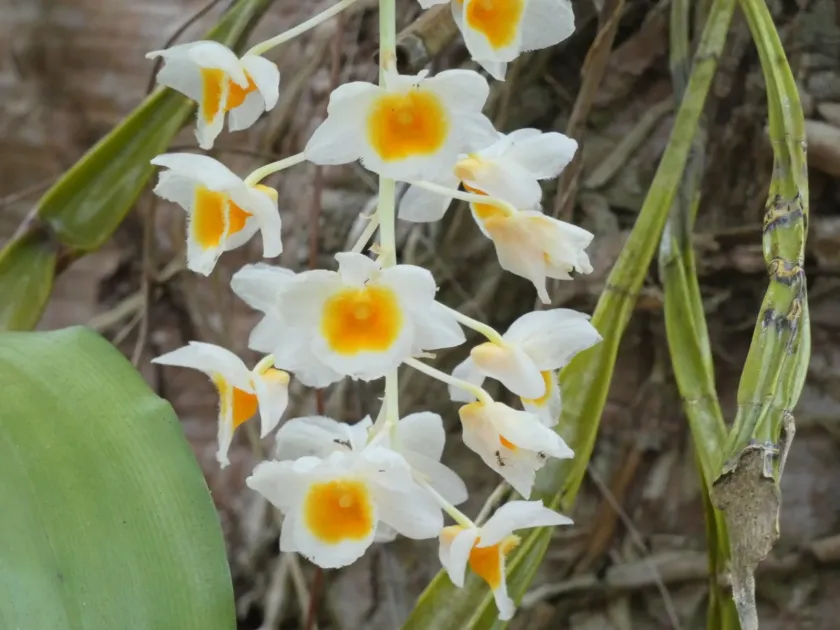
Description
Growing requirements
Dendrobium farmeri is a highly decorative epiphytic orchid species belonging to the Orchidaceae family. Naturally, this plant inhabits the tropical forests of Southeast Asia, ranging from India to Thailand, where it grows attached to tree branches in high-humidity canopy environments.
Botanically, this orchid is characterized by distinctive four-angled pseudobulbs. These structures serve as storage organs for water and nutrients, allowing the plant to survive fluctuating environmental conditions typical of tropical monsoon regions.
The culture requires a precise climate to thrive, specifically high air humidity levels ranging from 60% to 80%. Proper ventilation is strictly required to mimic the natural breezes of its habitat and to ensure that the roots do not remain saturated with stagnant water.
For successful flowering, Dendrobium farmeri needs a clear distinction between the growing and resting seasons. A significant drop in nighttime temperatures during the autumn months is essential to trigger the development of flower buds for the coming season.
The potting medium must be exceptionally well-draining, typically consisting of coarse fir or pine bark mixed with charcoal. This allows for optimal gas exchange in the root zone, preventing the degradation of the delicate velamen tissue covering the orchid's roots.
Main diseases and pests
The primary threats to this orchid culture are fungal infections, particularly root rot, caused by overwatering or poor air circulation. Symptoms often include yellowing leaves and darkened, mushy pseudobulbs that require prompt removal of the infected tissue.
Scale insects and mealybugs are the most common pests affecting this species. They hide in the leaf axils and on the undersides of leaves, causing structural damage and weakening the plant by extracting essential sap and nutrients.
Spider mites can be a problem in environments with low humidity, especially during winter months when indoor heating is in use. Regular misting and monitoring are vital to prevent large-scale infestations that can rapidly defoliate the plant.
Bacterial soft rot is a fast-moving disease that can be fatal to the orchid if not addressed immediately. It is often encouraged by warm, humid, and still air conditions, making efficient airflow a critical preventive measure in cultivation.
Viruses represent a severe threat to all orchid collections, as they are often transmitted via unsterilized cutting tools. Preventing the spread of these pathogens requires strict adherence to hygiene protocols when pruning or dividing the plants during repotting.