
Dendrobium falconeri
Dendrobium falconeri
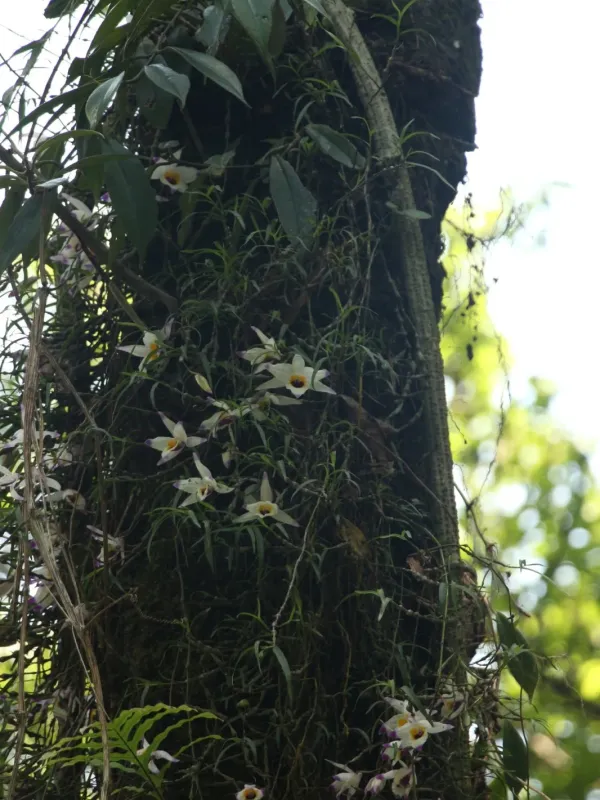
Description
Growing requirements
Dendrobium falconeri is a unique species belonging to the Orchidaceae family. Native to the mountain forests of the Himalayas, India, and parts of Southeast Asia, this orchid is an epiphyte that naturally grows on the branches of high-altitude trees, adapting to cool, misty environments.
Botanically, this species is characterized by its slender, pendulous, and heavily branched stems. The flowers are arguably among the most beautiful in the genus, featuring large, showy blooms with white petals tipped in purple and a distinct dark velvet-like blotch on the lip.
Cultivation requirements involve a cool to intermediate temperature range. During the growing season, temperatures between 20°C and 25°C are ideal. However, the plant requires a significant drop in temperature during the winter months (down to 10–12°C) to successfully trigger the flowering process.
This orchid is best grown mounted on slabs of cork bark or tree fern fiber. Mounting allows the root system to receive the constant air circulation it requires to prevent rot. If placed in pots, an extremely airy, fast-draining substrate consisting primarily of fine-grade fir bark is essential.
High humidity and consistent air movement are vital for the health of Dendrobium falconeri. During the active growth phase, the plant should be misted frequently or grown in an environment where humidity remains consistently above 60%, ensuring that the roots do not stay soaked for extended periods.
Main diseases and pests
The primary pests affecting this species are spider mites and scale insects, which often appear if the air is too dry or stagnant. Regular inspection of the pendulous stems and the undersides of leaves is necessary to catch and treat infestations early with appropriate pesticides.
Pathogenic fungi and bacteria are the most common causes of plant loss, usually resulting from poor ventilation combined with overly moist conditions. Maintaining a clean growing environment and ensuring the plant dries out adequately between watering sessions is the best preventive strategy against rot.