
Dendrobium draconis
Dendrobium draconis
Description
Growing requirements
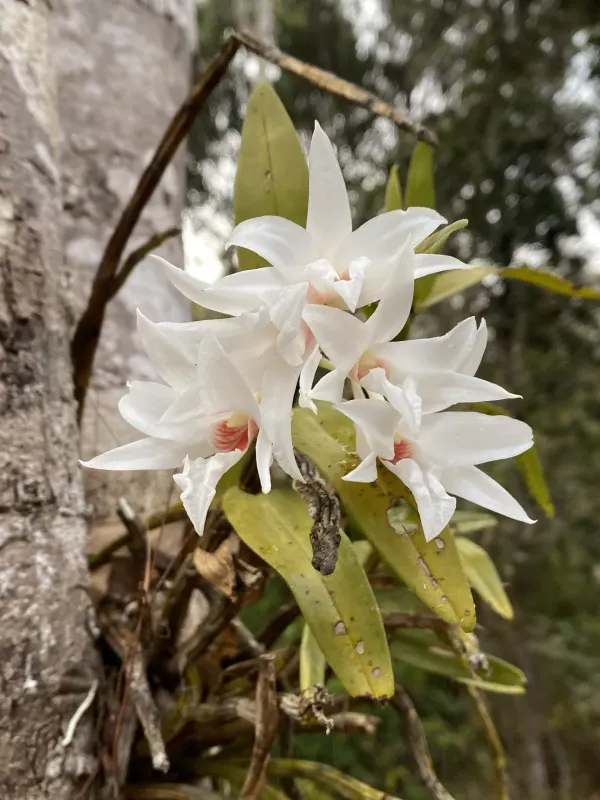
Dendrobium draconis is a notable epiphytic orchid species belonging to the family Orchidaceae. It is widely recognized for its crystalline white, fragrant flowers and dark, dragon-like markings on the labellum, which gives it a distinctive ornamental appearance.
This species is native to the tropical forests of Southeast Asia, including regions in Thailand, Laos, and Myanmar. It grows primarily as an epiphyte on tree branches, requiring a humid environment that mirrors the misty conditions of its natural highland habitats.
Optimal growth requires a warm and humid environment with a significant diurnal temperature variation. Maintaining temperatures between 22°C and 28°C during the day and lower at night is crucial to induce flowering and ensure the overall health of the pseudobulbs.
The substrate must prioritize high drainage and aeration, as the roots are highly susceptible to rot in dense, waterlogged media. A mixture consisting of large pine bark, charcoal, and perlite is generally considered the industry standard for this epiphytic crop.
Light intensity plays a critical role in the development of Dendrobium draconis. While it thrives in bright, filtered light, direct sunlight can damage the leaves. Growers often use 50-70% shade cloth in greenhouse environments to maintain the necessary light levels without risk of scorching.
Main diseases and pests
The primary threats to this species include common orchid pests such as scale insects and spider mites. These pests thrive in dry indoor conditions and can rapidly debilitate a plant by feeding on the sap, causing chlorosis and weakening the structure of the pseudobulbs.
Fungal pathogens, particularly those causing root rot, are the most frequent health issues encountered during cultivation. These are often triggered by improper watering schedules or low temperatures combined with stagnant air, leading to tissue decay.
Bacterial soft rot can occur if water remains trapped in the center of new growth or leaf axils for extended periods. This condition progresses rapidly, requiring immediate removal of infected tissue and treatment with appropriate systemic bactericides.
Viral infections, although rare, pose a serious risk to orchid collections. Since there is no cure, preventing mechanical transmission through shared cutting tools or insect vectors is the only effective way to protect the crop.
Nutrient deficiencies or toxicity due to hard water accumulation can lead to leaf tip dieback. Maintaining a regular flushing schedule with clean, low-mineral water is essential to prevent salt buildup in the container and ensure the substrate remains at an ideal pH level.