
Dendrobium discolor
Dendrobium discolor
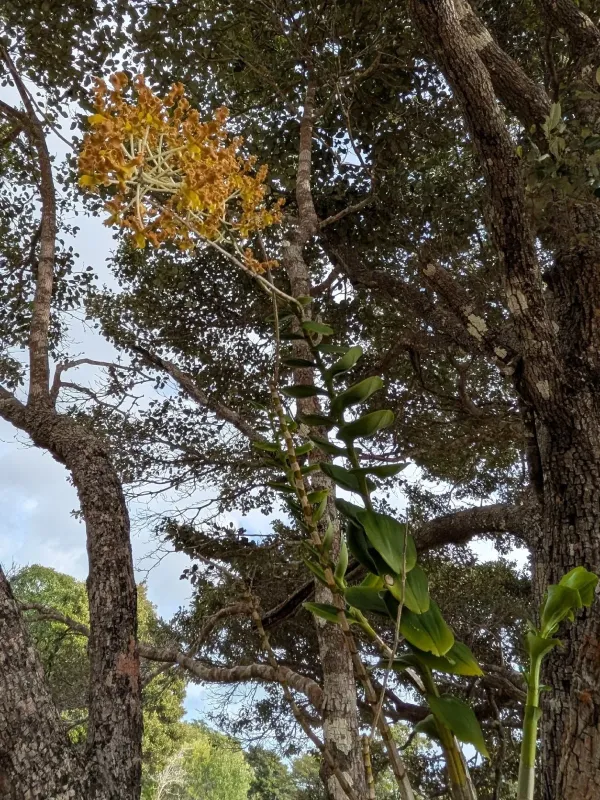
Description
Growing requirements
Dendrobium discolor is a robust species of the Orchidaceae family, native to tropical environments in Northern Australia, Indonesia, and New Guinea. This epiphytic plant is well-known for its tall, slender pseudobulbs that can grow to impressive heights in its natural habitat.
To cultivate this species successfully, it requires very bright, indirect light to stimulate healthy growth and potential blooming. It is a warm-growing orchid that thrives best in temperatures ranging from 20 to 32 degrees Celsius, needing plenty of airflow to prevent heat stress.
A well-draining potting medium is essential, typically consisting of coarse bark, charcoal, and perlite, which ensures the roots have access to both moisture and oxygen. The potting mix should be allowed to dry slightly between waterings to prevent root rot.
High humidity levels, ideally between 50% and 70%, are beneficial for this orchid, especially during its active growing season. Providing a consistent daily misting or using a humidifier helps mimic the tropical environment the plant is native to.
Fertilization should be applied sparingly during the growing season using a balanced orchid fertilizer. It is highly recommended to flush the medium with clean water occasionally to prevent the buildup of mineral salts, which can damage sensitive root tips.
Main diseases and pests
Common pests that infest Dendrobium discolor include aphids, mealybugs, and scale insects that cluster in the crevices of the pseudobulbs. Early detection is key, and horticultural oils or systemic insecticides are generally effective for controlling these infestations.
Fungal infections, such as black rot, are significant risks if the plant is kept in poor ventilation or overly wet conditions. If an infection is identified, the affected areas must be removed immediately with a sterilized tool to stop the spread to healthy tissues.
Bacterial soft rot can cause rapid tissue decay, often identified by a foul odor and a watery appearance of the stems. Reducing humidity and increasing airflow is essential, alongside the application of appropriate bactericides to save the plant.
Leaf spotting diseases may appear as small dark lesions, often resulting from moisture trapped on the leaves for too long. Improving the environment and removing diseased foliage is the primary strategy for managing these cosmetic and health issues.
Stress from environmental fluctuations, such as cold drafts or sudden temperature drops, can weaken the plant and make it susceptible to opportunistic pathogens. Maintaining a stable climate is the most effective way to keep the orchid resilient against pests and diseases.