
Dendrobium densiflorum
Dendrobium densiflorum
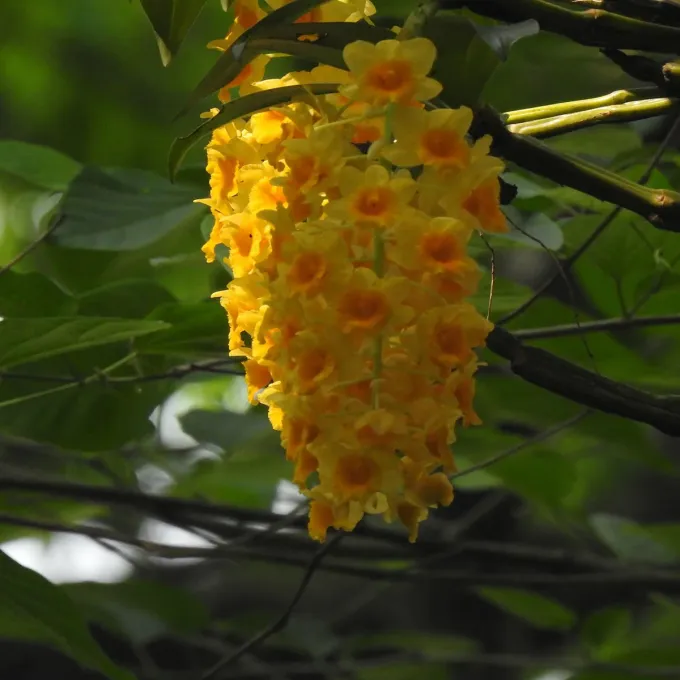
Description
Growing requirements
Dendrobium densiflorum is a spectacular member of the Orchidaceae family. This epiphytic species originates from the Himalayan foothills and extends its natural range through parts of Southeast Asia, thriving in high-altitude, humid tropical forests.
The plant requires high humidity levels, ideally maintained between 60 and 80 percent, to simulate its native mist-filled forest environment. Proper air circulation is just as crucial as humidity to prevent fungal buildup on the foliage.
Temperature management is a critical aspect of its agrotechnology. During the growing season, it prefers warm days and cooler nights, while the winter period necessitates a sharp temperature drop to approximately 12-15 degrees Celsius to trigger the formation of inflorescences.
When selecting a growing medium, one must prioritize drainage and aeration. A mix consisting of medium-grade pine bark, charcoal, and a bit of perlite works best for these epiphytes, allowing the root system to breathe and preventing stagnant water.
Lighting should be bright but filtered. In a controlled environment, placing the orchid near a bright window protected by sheer curtains will provide the necessary light intensity without risking leaf burn from excessive solar radiation.
Main diseases and pests
The most common pests affecting this orchid are spider mites and scale insects. These pests often proliferate if the environmental conditions are too dry, weakening the plant by draining the nutrients from its pseudobulbs and leaves.
Root and crown rot represent the primary diseases for this species, typically triggered by improper watering practices or a degraded substrate that holds too much moisture for too long. Immediate removal of affected parts and repotting in fresh media is necessary to restore health.