
Dendrobium denneanum
Dendrobium denneanum
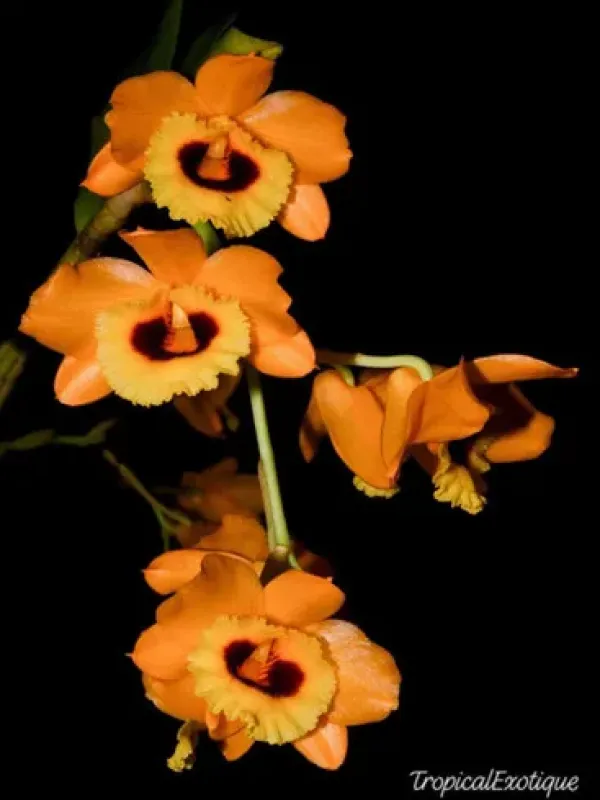
Description
Growing requirements
Dendrobium denneanum is a prominent member of the Orchidaceae family, specifically recognized as an epiphytic perennial. In its native habitat, it typically grows on tree trunks or rocky crevices, which allows it to receive filtered sunlight and excellent air circulation.
The species is primarily distributed throughout Southeast Asia, particularly in the regions of Southern China. It thrives in environments that experience distinct wet and dry seasons, a cycle that is crucial for its natural physiological processes and development.
Botanically, the plant is characterized by its cylindrical pseudobulbs, which act as vital storage organs for moisture and nutrients. Its leaves are coriaceous and lanceolate, adapted to withstand periods of limited water availability and high solar intensity typical of its tropical niche.
Cultivation requires a specialized growing medium designed for epiphytes, typically consisting of conifer bark, charcoal, and sphagnum moss. Proper drainage is the most critical factor, as moisture-retentive substrates that lack aeration often lead to rapid root decay.
Optimal growth conditions involve a temperature gradient between the growing season and the dormancy period. High relative humidity, combined with bright, indirect light, is essential to replicate the natural forest canopy conditions required for healthy flowering.
Main diseases and pests
The primary threats to the stability of a Dendrobium denneanum crop are fungal pathogens, particularly root and stem rot. These infections thrive in environments with poor ventilation and high humidity, which are common issues in indoor greenhouse management.
Insect pests, such as spider mites and scale insects, represent a significant management challenge. By colonizing the leaves and stems, these pests deplete the plant's resources and create entry points for secondary bacterial infections that can be fatal to the crop.
Disease management strategies emphasize prevention through climate control and the maintenance of rigorous sanitary standards within the growing facility. Regular inspection and the immediate isolation of infected individuals are standard practices to prevent widespread loss.
Chemical control methods, including fungicides and miticides, are utilized when biological controls are insufficient. However, growers must exercise caution to ensure these treatments do not compromise the safety or quality of the final harvested product.
Ongoing research into resistant cultivars and optimized greenhouse environments continues to be a focus for the agricultural sector. Ensuring long-term productivity requires a balanced approach to pest management and strict adherence to environmental growth parameters.
Harvesting
Dendrobium denneanum has historical significance in traditional herbal medicine, where it is valued for its unique phytochemical profile. Its pseudobulbs contain polysaccharides and alkaloids, which are frequently extracted for use in dietary supplements and wellness teas.
Harvesting protocols involve selecting mature pseudobulbs at the end of the vegetative cycle, when the plant has ceased active growth and has concentrated its metabolic resources. Careful timing ensures the highest quality of active ingredients within the harvested biomass.
The harvest must be performed using sanitized tools to ensure minimal tissue damage to the mother plant. After collection, the pseudobulbs are dried under controlled environmental conditions to prevent the degradation of heat-sensitive chemical compounds.
Beyond pharmaceutical applications, the plant is highly sought after by commercial growers in the ornamental flower market. Its aesthetic flowers and characteristic scent make it a desirable addition to premium botanical collections worldwide.
Standardized post-harvest processing includes cleaning and sorting based on moisture content and size. Adherence to these agricultural standards is vital for maintaining the efficacy of the product and its market value in the international botanical trade.